Ch. 26 Fluid, Electrolyte, and Acid-Base Balance
Marieb - Human Anatomy & Physiology 7th Edition
Marieb, Hoehn7th EditionHuman Anatomy & PhysiologyISBN: 9780805359091Not the one you use?Change textbook
Chapter 25, Problem 1

Body water content is greatest in:
a. Infants
b. Young adults
c. Elderly adults

Verified step by step guidance
1
Understand that body water content varies with age due to changes in body composition, such as fat and muscle mass.
Recall that infants have a higher percentage of body water compared to adults because their bodies contain less fat and more water-rich tissues.
Recognize that young adults have a moderate body water content, lower than infants but higher than elderly adults.
Know that elderly adults typically have the lowest body water content due to increased fat deposits and decreased muscle mass, both of which contain less water.
Conclude that among the given options, infants have the greatest body water content.

Verified video answer for a similar problem:

This video solution was recommended by our tutors as helpful for the problem above.
Video duration:
1m
Was this helpful?

Key Concepts

Here are the essential concepts you must grasp in order to answer the question correctly.

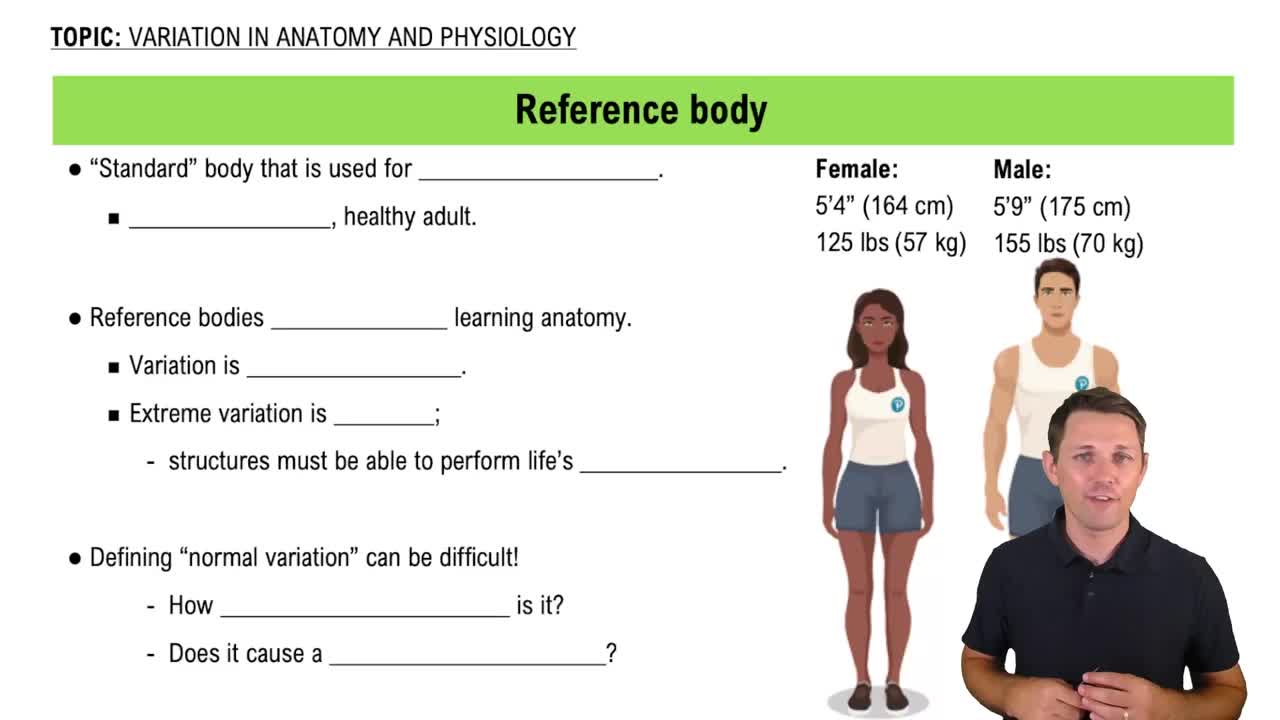
Body Water Content Variation with Age

Body water content changes throughout life, being highest in infancy and gradually decreasing with age. Infants have a larger proportion of water relative to their body weight compared to adults and elderly individuals.
Recommended video:
Guided course
04:21
Variation in A&P

Physiological Differences in Infants

Infants have a higher percentage of total body water, often around 70-80%, due to their higher metabolic rate and greater extracellular fluid volume, which supports rapid growth and development.
Recommended video:
Guided course
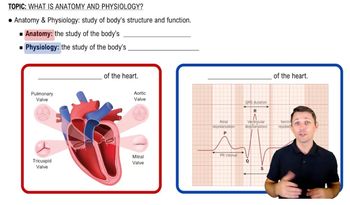
03:04
The Difference Between Anatomy and Physiology

Impact of Aging on Body Water

As people age, total body water decreases due to loss of muscle mass and increased fat tissue, which contains less water. Elderly adults typically have lower body water content, making them more susceptible to dehydration.
Recommended video:
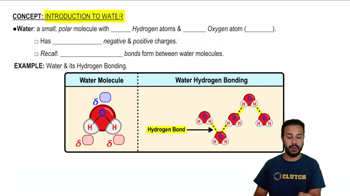
01:54
Introduction to Water