Ch. 27 The Reproductive System
Marieb - Human Anatomy & Physiology 7th Edition
Marieb, Hoehn7th EditionHuman Anatomy & PhysiologyISBN: 9780805359091Not the one you use?Change textbook
Chapter 26, Problem 19

In menstruation, the functional layer is shed from the endometrium. Explain the hormonal and physical factors responsible for this shedding. (Hint: See Figure.)
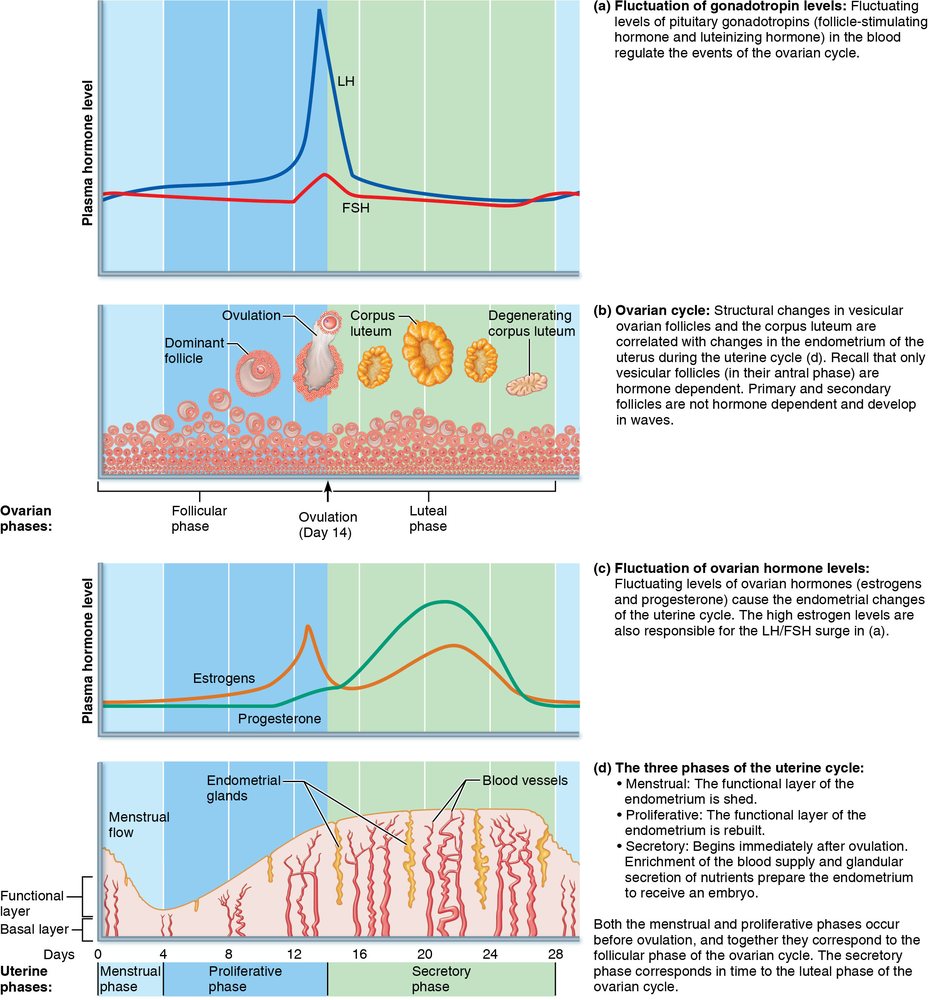
Diagram illustrating hormonal fluctuations and uterine changes during the menstrual cycle, highlighting ovulation and endometrial shedding.

Verified step by step guidance
1
Understand the structure of the endometrium: The endometrium is the inner lining of the uterus, consisting of two layers—the functional layer (shed during menstruation) and the basal layer (which remains intact). The functional layer undergoes cyclic changes in response to hormonal fluctuations.
Identify the hormonal changes: During the menstrual cycle, estrogen and progesterone levels fluctuate. After ovulation, progesterone levels rise due to secretion from the corpus luteum, maintaining the functional layer. If fertilization does not occur, the corpus luteum degenerates, leading to a sharp decline in progesterone and estrogen levels.
Explain the role of hormonal withdrawal: The drop in progesterone and estrogen causes the spiral arteries in the functional layer to constrict (vasoconstriction). This reduces blood flow to the tissue, leading to ischemia (lack of oxygen) and eventual tissue death in the functional layer.
Describe the physical process of shedding: As the functional layer becomes necrotic due to ischemia, the tissue breaks down. The spiral arteries rupture, leading to bleeding, and the dead tissue is sloughed off, resulting in menstruation.
Connect the process to Figure 26.25: Refer to the diagram to visualize the hormonal fluctuations and their impact on the endometrium. Note how the decline in progesterone and estrogen correlates with the shedding of the functional layer during the menstrual phase of the cycle.

Verified video answer for a similar problem:

This video solution was recommended by our tutors as helpful for the problem above.
Video duration:
2m
Was this helpful?

Key Concepts

Here are the essential concepts you must grasp in order to answer the question correctly.

Endometrial Cycle

The endometrial cycle refers to the changes that occur in the endometrium, the inner lining of the uterus, throughout the menstrual cycle. It consists of three phases: the proliferative phase, where the endometrium thickens; the secretory phase, where it prepares for potential implantation; and the menstrual phase, during which the functional layer is shed if fertilization does not occur.
Recommended video:
Guided course
9:44
Events in the Cardiac Cycle

Hormonal Regulation

Hormonal regulation during the menstrual cycle is primarily controlled by estrogen and progesterone. Estrogen promotes the growth of the endometrial lining, while progesterone stabilizes it during the secretory phase. A drop in these hormone levels triggers the shedding of the functional layer, leading to menstruation.
Recommended video:
Guided course
13:06
Review of Major Hormones

Menstrual Shedding Mechanism

The shedding of the endometrial functional layer involves both physical and biochemical processes. As hormone levels decline, the blood supply to the endometrium decreases, leading to tissue breakdown and the release of prostaglandins, which cause uterine contractions. This results in the expulsion of the endometrial tissue during menstruation.
Recommended video:
3:02
Internal Regulation - The Myogenic Mechanism