Ch. 6 Bones and Skeletal Tissues
Marieb - Human Anatomy & Physiology 7th Edition
Marieb, Hoehn7th EditionHuman Anatomy & PhysiologyISBN: 9780805359091Not the one you use?Change textbook
Chapter 6, Problem 21

What would a long bone look like at the end of adolescence if bone remodeling did not occur?

Verified step by step guidance
1
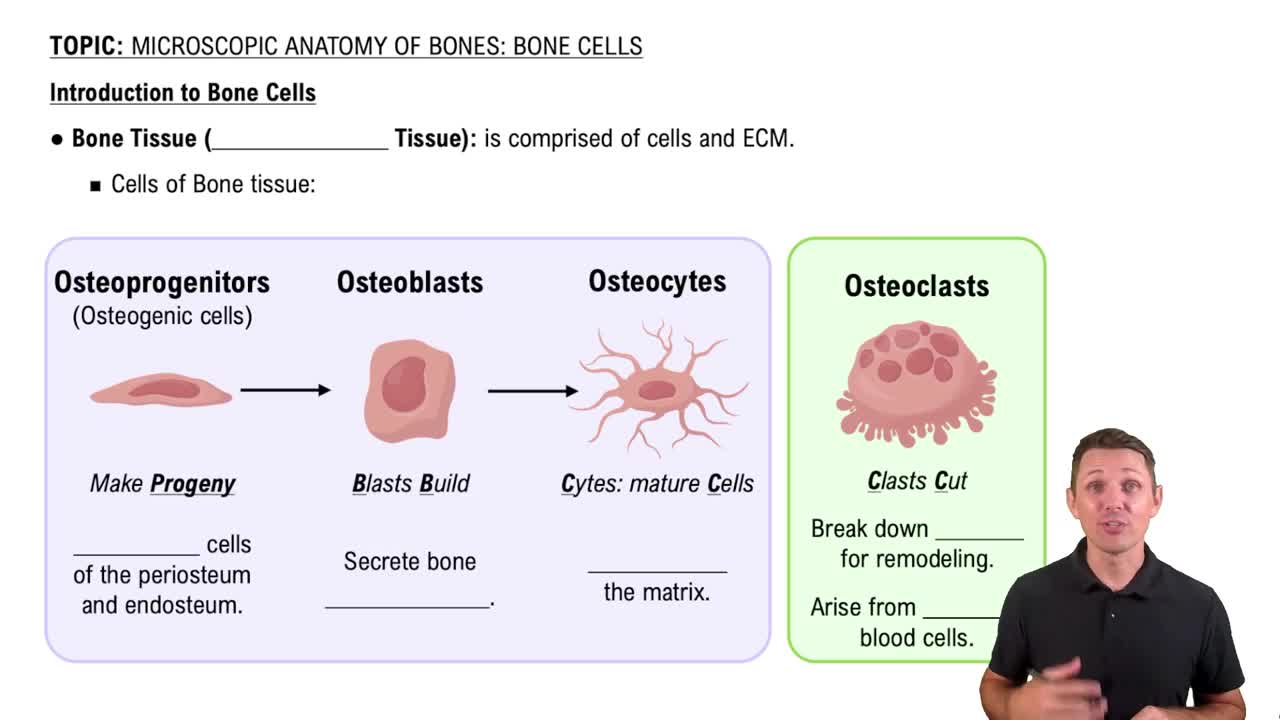
Understand the normal process of bone remodeling, which involves the continuous breakdown of old bone by osteoclasts and formation of new bone by osteoblasts, allowing bones to adapt, repair, and maintain strength throughout life.
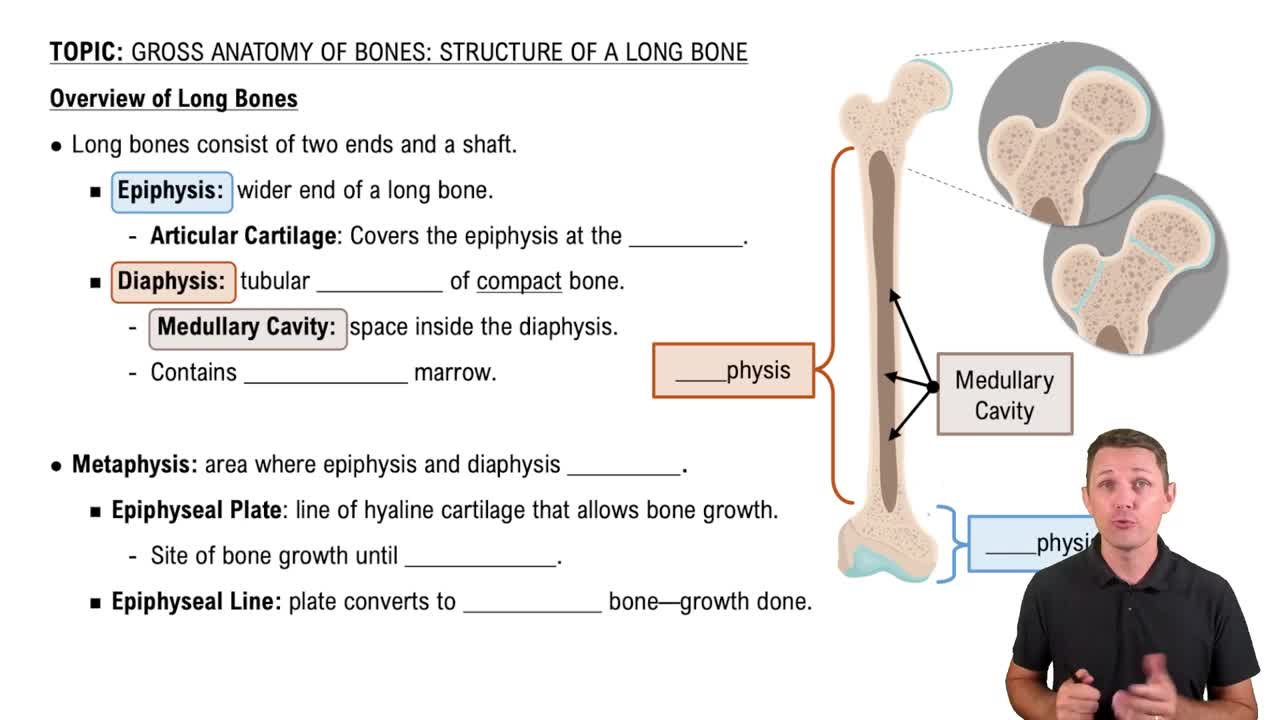
Recall that during adolescence, long bones grow in length primarily through the activity of the epiphyseal (growth) plates, and remodeling helps shape the bone, remove old bone tissue, and maintain proper bone density and structure.
Consider what happens if bone remodeling does not occur: old bone tissue would not be resorbed, and new bone would not be properly formed or shaped, leading to accumulation of old, possibly brittle bone and irregular bone structure.
Visualize the end of a long bone without remodeling: the bone might have an abnormal shape, with rough or uneven surfaces, possibly thicker but weaker areas, and the epiphyseal plate might not close properly or the bone might not adapt to mechanical stresses.
Summarize that without remodeling, the long bone at the end of adolescence would likely appear structurally abnormal, with impaired shape and strength, potentially affecting its function and increasing susceptibility to fractures.

Verified video answer for a similar problem:

This video solution was recommended by our tutors as helpful for the problem above.
Video duration:
3m
Was this helpful?

Key Concepts

Here are the essential concepts you must grasp in order to answer the question correctly.

Bone Remodeling

Bone remodeling is a continuous process where old bone tissue is broken down by osteoclasts and new bone is formed by osteoblasts. This process maintains bone strength, repairs micro-damage, and adapts bone structure to stress throughout life.
Recommended video:
Guided course
4:19
Introduction to Bone Cells

Long Bone Growth and Development

Long bones grow in length through the activity of the growth plate during childhood and adolescence. After adolescence, the growth plates close, and bone remodeling becomes the primary process for maintaining bone health and shape.
Recommended video:
Guided course
6:19
Overview of Long Bones

Effects of Impaired Bone Remodeling

Without bone remodeling, old or damaged bone would accumulate, leading to structural weaknesses and deformities. At the end of adolescence, a long bone would likely appear irregular, brittle, or misshapen due to the lack of renewal and repair.
Recommended video:
1:32
Effects of the Complement System
Related Practice
Textbook Question

Compare bone to cartilage tissue relative to its resilience, speed of regeneration, and access to nutrients.

838
views
Textbook Question

Noah Beckenstein went to weight-lifting camp in the summer between seventh and eighth grade. He noticed that the camp trainer put tremendous pressure on him and his friends to improve their strength. After an especially vigorous workout, Noah's arm felt extremely sore and weak around the elbow. He went to the camp doctor, who took X rays and then told him that the injury was serious, for the 'end of his upper arm bone was starting to twist off.' What had happened? Could the same thing happen to Noah's 23-year-old sister, Karen, who was also starting a program of weight lifting? Why or why not?

719
views
Textbook Question

Compare and contrast controls of bone remodeling exerted by hormones and by mechanical and gravitational forces, including the purpose of each control system and changes in bone architecture that might occur.

532
views
Textbook Question

Mrs. Abbruzzo brought her 4-year-old daughter to the doctor, complaining that she didn't 'look right.' The child's forehead was enlarged, her rib cage was knobby, and her lower limbs were bent and deformed. X rays revealed very thick epiphyseal plates. Mrs. Abbruzzo was advised to increase dietary amounts of vitamin D and milk and to get the girl outside to play in the sun. Considering the child's signs and symptoms, what disease do you think she has? Explain the doctor's instructions.

987
views