Ch. 7 The Skeleton
Marieb - Human Anatomy & Physiology 7th Edition
Marieb, Hoehn7th EditionHuman Anatomy & PhysiologyISBN: 9780805359091Not the one you use?Change textbook
Chapter 7, Problem 8

Distinguish between the anulus fibrosus and nucleus pulposus regions of a disc. Which provides durability and strength? Which provides resilience? Which part is involved in a 'slipped' disc?

Verified step by step guidance
1
Step 1: Define the two main regions of an intervertebral disc: the anulus fibrosus and the nucleus pulposus. The anulus fibrosus is the tough, outer ring composed of several layers of fibrocartilage, while the nucleus pulposus is the soft, gel-like center of the disc.
Step 2: Explain the functional roles of each region. The anulus fibrosus provides durability and strength to the disc because its layered fibrocartilage structure resists tensile forces and prevents the disc from rupturing under pressure.
Step 3: Describe the role of the nucleus pulposus. This gel-like core provides resilience and acts as a shock absorber by distributing compressive forces evenly across the disc during movement and weight-bearing activities.
Step 4: Clarify which part is involved in a 'slipped' or herniated disc. A 'slipped' disc occurs when the nucleus pulposus protrudes through a tear or weakness in the anulus fibrosus, potentially compressing nearby nerves and causing pain.
Step 5: Summarize the distinctions: the anulus fibrosus provides strength and durability, the nucleus pulposus provides resilience and shock absorption, and the herniation involves the nucleus pulposus escaping through the anulus fibrosus.

Verified video answer for a similar problem:

This video solution was recommended by our tutors as helpful for the problem above.
Video duration:
2m
Was this helpful?

Key Concepts

Here are the essential concepts you must grasp in order to answer the question correctly.

Anulus Fibrosus

The anulus fibrosus is the tough, outer layer of the intervertebral disc composed of concentric rings of collagen fibers. It provides durability and strength to the disc by resisting tensile forces and maintaining structural integrity under pressure.

Nucleus Pulposus

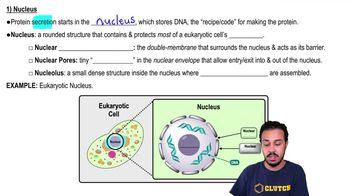
The nucleus pulposus is the gel-like, inner core of the intervertebral disc rich in water and proteoglycans. It provides resilience by absorbing compressive forces and allowing the disc to act as a shock absorber between vertebrae.
Recommended video:
06:32
Nucleus

Slipped Disc (Herniated Disc)

A slipped or herniated disc occurs when the nucleus pulposus protrudes through a tear in the anulus fibrosus. This displacement can compress nearby nerves, causing pain and neurological symptoms.
Recommended video:
Guided course
6:01
Structure of the Sarcomere: Bands, Zones, Discs & Lines