Ch. 10 Muscle Tissue
Martini - Fundamentals of Anatomy & Physiology 11th Edition
Martini, Nath, Bartholomew11th EditionFundamentals of Anatomy & PhysiologyISBN: 9780136874089Not the one you use?Change textbook
Chapter 10, Problem 30

Bill broke his leg in a football game, and after six weeks the cast is finally removed. As he steps down from the examination table, he loses his balance and falls. Why?

Verified step by step guidance
1
Step 1: Understand that when a limb is immobilized in a cast for an extended period, the muscles and sensory receptors in that limb undergo changes due to lack of use.
Step 2: Recognize that muscle atrophy occurs because the muscles are not contracting regularly, leading to weakness and reduced ability to support the body.
Step 3: Consider that proprioceptors, such as muscle spindles and joint receptors, which provide the brain with information about limb position and movement, become less sensitive or less effective after immobilization.
Step 4: Realize that the loss of proprioceptive feedback and muscle strength impairs balance and coordination, making it difficult for Bill to maintain stability when he first steps down from the table.
Step 5: Conclude that Bill's fall is due to a combination of muscle weakness and impaired proprioception following the period of immobilization in the cast.

Verified video answer for a similar problem:

This video solution was recommended by our tutors as helpful for the problem above.
Video duration:
3m
Was this helpful?

Key Concepts

Here are the essential concepts you must grasp in order to answer the question correctly.

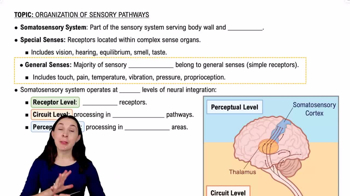
Proprioception

Proprioception is the body's ability to sense its position and movement in space through receptors in muscles and joints. After immobilization, such as wearing a cast, proprioceptive feedback can be diminished, leading to impaired balance and coordination.
Recommended video:
3:34
Somatosensory System

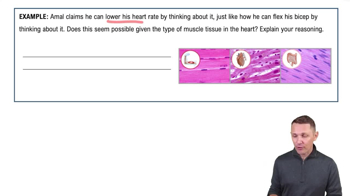
Muscle Atrophy and Weakness

Muscle atrophy refers to the loss of muscle mass and strength due to disuse, common after prolonged immobilization. Weak muscles around the injured leg reduce stability and control, increasing the risk of falls when weight-bearing resumes.
Recommended video:
Guided course
2:00
Introduction to Muscles and Muscle Tissue Example 1

Neuromuscular Re-education

Neuromuscular re-education involves retraining the nervous system and muscles to work together effectively after injury or immobilization. Without proper rehabilitation, the coordination needed for balance may be compromised, causing instability when standing or walking.
Recommended video:
Guided course
5:56
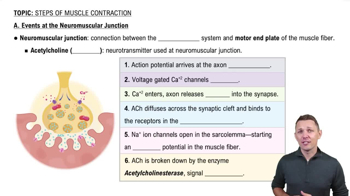
A. Events at the Neuromuscular Junction