Ch. 24 The Digestive System
Martini - Fundamentals of Anatomy & Physiology 11th Edition
Martini, Nath, Bartholomew11th EditionFundamentals of Anatomy & PhysiologyISBN: 9780136874089Not the one you use?Change textbook
Chapter 24, Problem 7

Most of the digestive tract is lined by_____epithelium.
(a) pseudostratified ciliated columnar
(b) cuboidal
(c) stratified squamous
(d) simple
(e) simple columnar

Verified step by step guidance
1
Step 1: Understand the types of epithelial tissue listed in the options. Each type has specific locations and functions in the body. For example, pseudostratified ciliated columnar epithelium is typically found in the respiratory tract, cuboidal epithelium is common in glands and ducts, stratified squamous epithelium is found in areas subject to abrasion, simple epithelium refers to a single layer of cells, and simple columnar epithelium is often involved in absorption and secretion.
Step 2: Recall the primary function of the digestive tract lining, which includes absorption of nutrients and secretion of digestive enzymes and mucus. This function requires a type of epithelium that facilitates these processes efficiently.
Step 3: Identify which epithelial type is best suited for absorption and secretion in the digestive tract. Simple columnar epithelium is known for these roles and is commonly found lining most of the digestive tract, including the stomach and intestines.
Step 4: Eliminate options that do not fit the digestive tract lining based on their typical locations and functions. For example, pseudostratified ciliated columnar epithelium is mainly in the respiratory tract, and stratified squamous epithelium is found in the mouth and esophagus where protection against abrasion is needed.
Step 5: Conclude that the most appropriate answer is the epithelium type that lines most of the digestive tract, which is simple columnar epithelium.

Verified video answer for a similar problem:

This video solution was recommended by our tutors as helpful for the problem above.
Was this helpful?

Key Concepts

Here are the essential concepts you must grasp in order to answer the question correctly.

Types of Epithelial Tissue

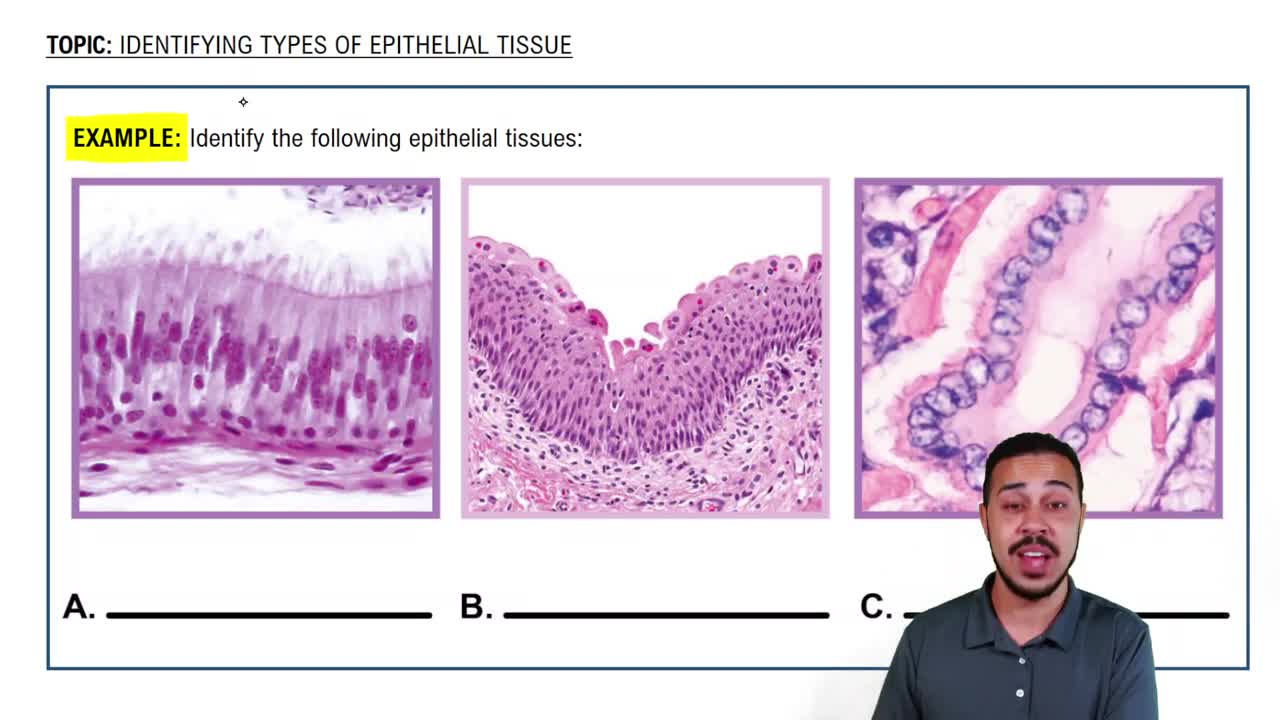
Epithelial tissues are classified based on cell shape and layering, including simple (single layer) and stratified (multiple layers) types. Common shapes are squamous (flat), cuboidal (cube-shaped), and columnar (tall). Understanding these types helps identify their functions and locations in the body.
Recommended video:
Guided course
07:25
Identifying Types of Epithelial Tissue Example 1

Epithelial Lining of the Digestive Tract

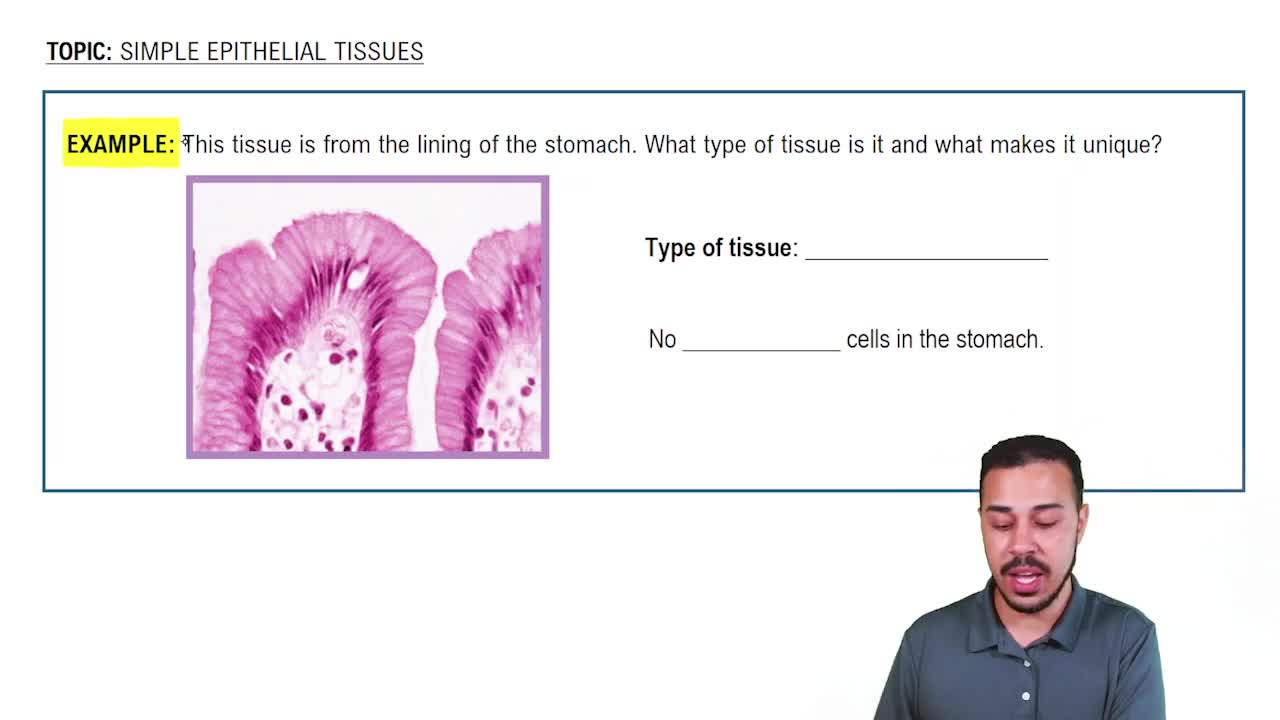
Most of the digestive tract, especially from the stomach to the intestines, is lined by simple columnar epithelium. This type facilitates absorption and secretion, essential for digestion. The esophagus, however, has stratified squamous epithelium to protect against abrasion.
Recommended video:
Guided course
03:41
Simple Epithelial Tissues Example 2

Function and Adaptation of Epithelial Types

Different epithelial types serve specific roles: simple columnar epithelium aids nutrient absorption and mucus secretion, while stratified squamous epithelium provides protection in high-friction areas. Recognizing these functions clarifies why certain epithelia line particular digestive regions.
Recommended video:
Guided course
07:25
Identifying Types of Epithelial Tissue Example 1