Ch. 6 Bones and Bone Structure
Martini - Fundamentals of Anatomy & Physiology 11th Edition
Martini, Nath, Bartholomew11th EditionFundamentals of Anatomy & PhysiologyISBN: 9780136874089Not the one you use?Change textbook
Chapter 6, Problem 9

The primary reason that osteoporosis accelerates after menopause in women is:
(a) Reduced levels of circulating estrogens
(b) Reduced levels of vitamin C
(c) Diminished osteoclast activity
(d) Increased osteoblast activity

Verified step by step guidance
1
Understand the role of estrogen in bone metabolism: Estrogen helps maintain a balance between bone resorption (breakdown) by osteoclasts and bone formation by osteoblasts.
Recognize that after menopause, estrogen levels drop significantly in women, which disrupts this balance.
Know that reduced estrogen leads to increased osteoclast activity, causing more bone resorption than formation.
Identify that this increased bone resorption results in a net loss of bone density, which accelerates osteoporosis.
Evaluate the answer choices by linking the physiological effect of estrogen reduction to the correct option, which involves reduced estrogen levels rather than vitamin C, osteoclast activity, or osteoblast activity.

Verified video answer for a similar problem:

This video solution was recommended by our tutors as helpful for the problem above.
Video duration:
2m
Was this helpful?

Key Concepts

Here are the essential concepts you must grasp in order to answer the question correctly.

Role of Estrogens in Bone Metabolism

Estrogens are hormones that help maintain bone density by inhibiting bone resorption. After menopause, estrogen levels drop significantly, leading to increased activity of bone-resorbing cells and accelerated bone loss, which contributes to osteoporosis.
Recommended video:
02:17
Introduction to Metabolism

Osteoclast and Osteoblast Activity

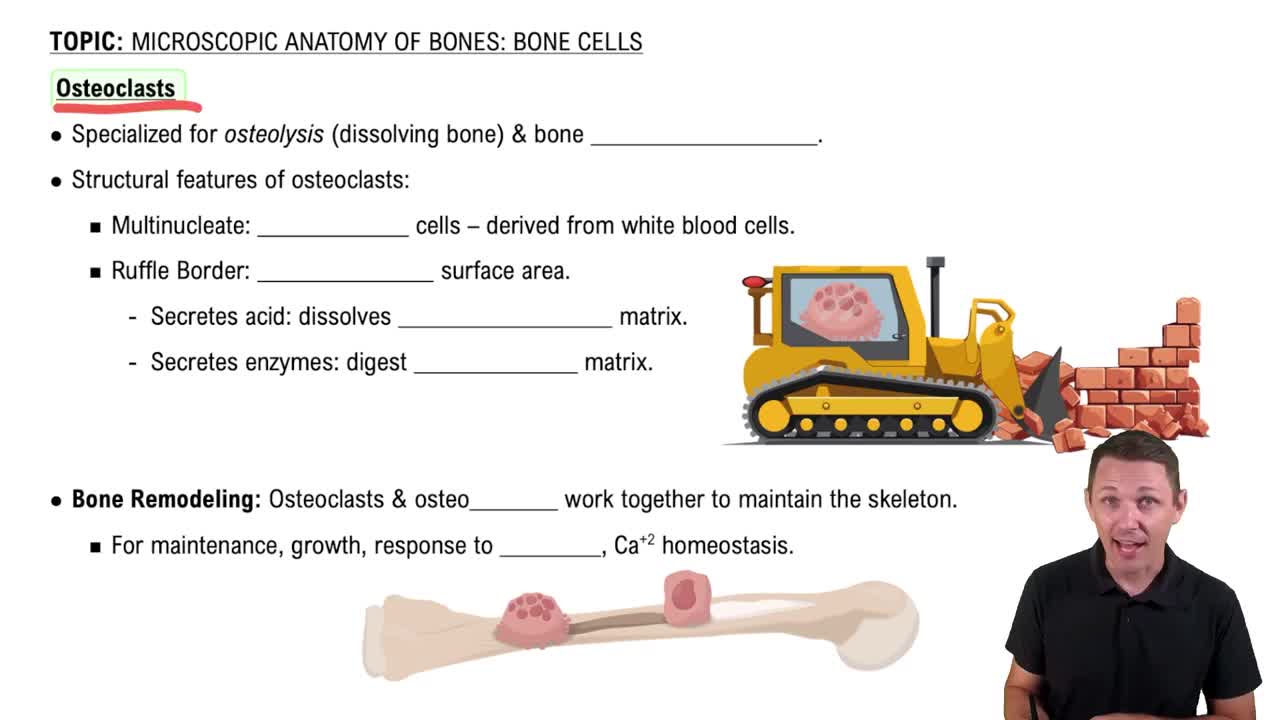
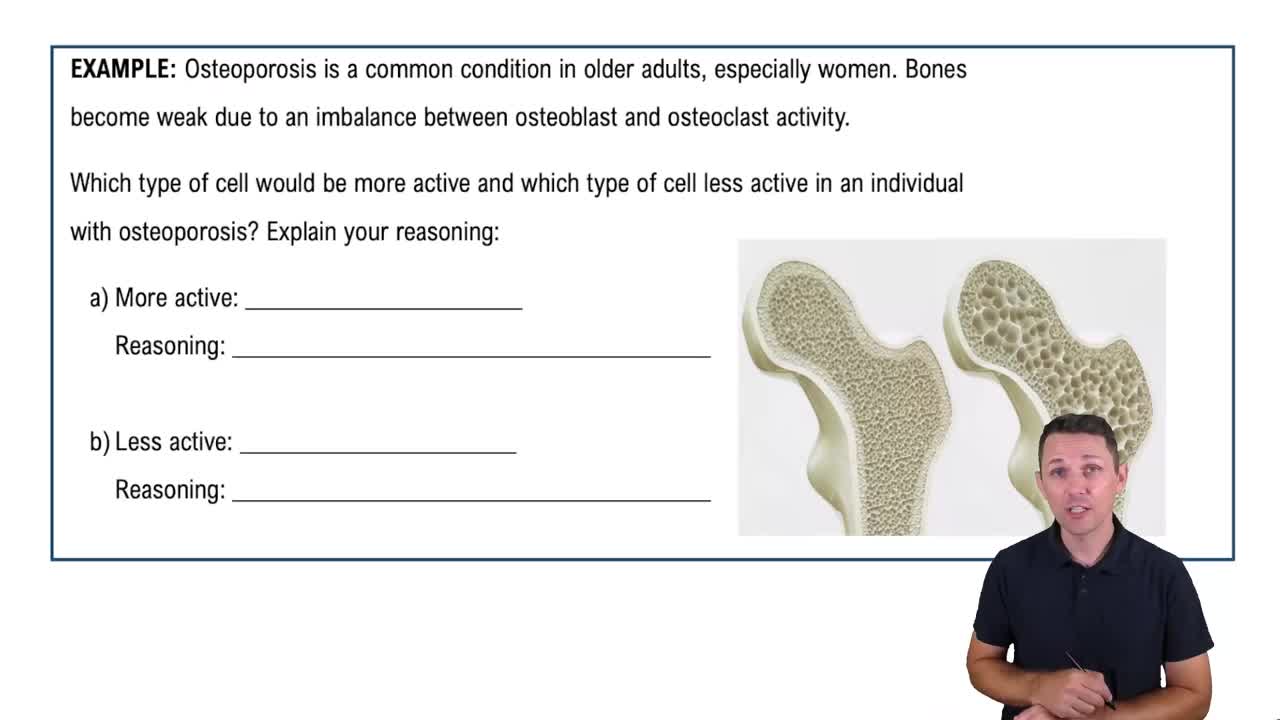
Osteoclasts break down bone tissue, while osteoblasts build new bone. A balance between these cells maintains healthy bone remodeling. In osteoporosis, increased osteoclast activity or decreased osteoblast activity disrupts this balance, causing bone weakening.
Recommended video:

Osteoporosis and Menopause

Osteoporosis is a condition characterized by reduced bone mass and increased fracture risk. It often accelerates after menopause due to hormonal changes, especially the decline in estrogen, which leads to increased bone resorption and decreased bone formation.
Recommended video:
Guided course
1:57
Microscopic Anatomy of Bones - Bone Cells Example 2