What are the four main stages of food processing in animals?
Ingestion (eating), digestion (breaking down food), absorption (uptake of nutrients), and elimination (removal of waste).
Define essential nutrients in animal nutrition.
Nutrients that animals cannot synthesize and must obtain from their diet, including essential amino acids, essential fatty acids, vitamins, and minerals.
What is the difference between malnutrition, undernourishment, and overnourishment?
Malnutrition is imbalance of essential nutrients; undernourishment is insufficient chemical energy intake; overnourishment is excess energy intake leading to fat accumulation and health risks.
Describe the four feeding strategies in animals.
Filter feeders trap food particles; substrate feeders live on/in food source; fluid feeders suck nutrient-rich fluids; bulk feeders eat large pieces of food.
What is the difference between mechanical and chemical digestion?
Mechanical digestion physically breaks food into smaller pieces; chemical digestion uses enzymatic hydrolysis to split molecules into absorbable units.
Compare intracellular and extracellular digestion.
Intracellular digestion occurs inside cells in membrane-bound compartments; extracellular digestion occurs outside cells in digestive compartments like the gastrovascular cavity or alimentary canal.
What are accessory glands in the digestive system and their roles?
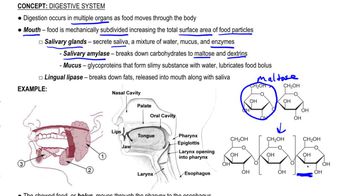
Glands like salivary glands, pancreas, liver, and gallbladder that secrete enzymes and substances aiding digestion but do not directly pass food.
What is the function of the stomach in digestion?
Stores food, secretes gastric juice (HCl and pepsin) to chemically digest proteins, and churns food to form chyme.
How does the small intestine contribute to digestion and absorption?
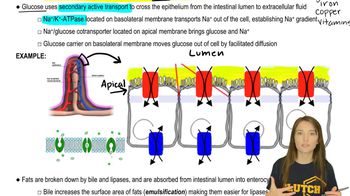
Major site of digestion and absorption; receives secretions from pancreas, liver, and gallbladder; contains villi and microvilli to increase surface area.
What is the role of bile in digestion?
Produced by the liver and stored in the gallbladder, bile emulsifies fats to aid digestion and absorption.
Describe the function of the large intestine.
Absorbs water and nutrients, forms and stores feces, and houses the appendix which contains symbiotic microorganisms.
How is mammalian dentition adapted to diet?
Incisors cut, canines pierce/tear, premolars and molars grind food; dentition varies among carnivores, herbivores, and omnivores.
How do digestive systems differ between carnivores and herbivores?
Carnivores have large, expandable stomachs and short digestive tracts; herbivores have longer digestive systems to process plant material.
What regulates the digestive process in animals?
The enteric nervous system and endocrine system regulate digestion by activating steps as needed.
Define metabolic rate and its types.
Metabolic rate is energy use per unit time; basal metabolic rate is minimum for endotherms; standard metabolic rate is for ectotherms.
How is excess energy stored in animals?
Stored as glycogen in liver and muscles and as triglycerides in adipose cells; fat stores are larger and more long-term.
What is the main difference between endocrine and exocrine glands?
Endocrine glands secrete hormones into the bloodstream; exocrine glands secrete substances through ducts.
How do water-soluble and lipid-soluble hormones differ in action?
Water-soluble hormones bind to cell-surface receptors; lipid-soluble hormones cross membranes and bind receptors inside the cell.
What is the role of the hypothalamus in endocrine regulation?
 Back
Back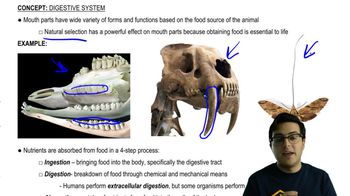
 05:11
05:11