 Back
BackGeneral Biology: Plant and Fungi Key Concepts
 06:17
06:17
Terms in this set (33)
1) Rings of cellulose-synthesizing proteins, 2) Structure of flagellated sperm, 3) Formation of phragmoplast during cell division.
Plants have a multicellular, dependent embryo stage protected by parental tissues.
1) Alternation of generations, 2) Multicellular, dependent embryos, 3) Walled spores produced in sporangia, 4) Apical meristems.
Sporangia produce spores in plants.
Antheridia produce sperm cells.
The gametophyte is haploid.
The gametophyte stage is haploid and produces gametes by mitosis.
Antheridia (male) and archegonia (female).
Apical meristems allow plants to grow continuously in length at roots and shoots.
Apical meristems enable continuous growth.
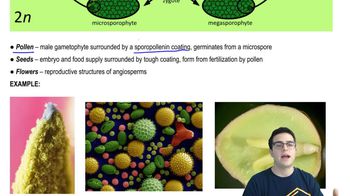
Sporopollenin protects spores from desiccation and damage.
Mycorrhizae enhance nutrient uptake in plants.
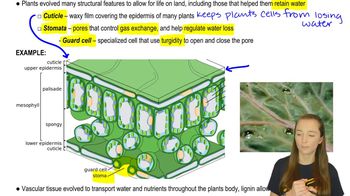
Cuticle reduces water loss in plants.
Nonvascular plants, seedless vascular plants, gymnosperms, angiosperms.
naked seed plants.
Angiosperms make up 90% of plant species.
Nonvascular plants lack vascular tissue and are small and low to the ground.
Gametophyte is dominant in nonvascular plants.
Rhizoids anchor moss gametophytes to substrate.
Rhizoids anchor plants and aid in water absorption.
Seta connects sporophyte to gametophyte.
Sporangium (capsule), seta, foot, and stalk.
Sperm are produced by male gametophytes.
Eggs are produced by female gametophytes.
Hepatophyta (liverworts), Anthocerophyta (hornworts), Bryophyta (mosses).
They belong to nonvascular plants.
Water is required for sperm to swim to eggs.
Mosses belong to Bryophyta.
Mosses help retain moisture and prevent soil erosion.
Vascular tissue and dominant sporophyte generation.
Moist environments due to sperm needing water for fertilization.
Sori are clusters of sporangia.
Sporophylls are leaves bearing sporangia.