 Back
BackGeneral Biology: RNA Splicing, Gene Expression, and Cancer Biology
 02:32
02:32
Terms in this set (17)
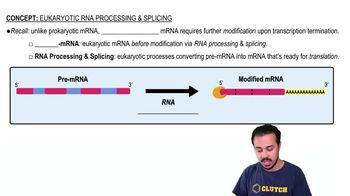
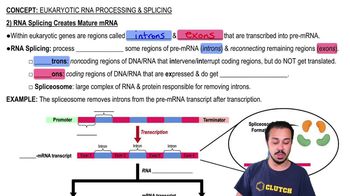
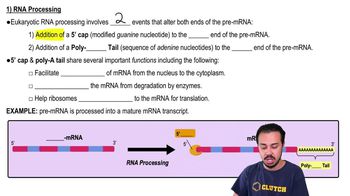
RNA splicing removes non-coding regions (introns) from pre-mRNA and joins protein-coding regions (exons) to form mature mRNA.
The same mRNA strand can be spliced in different ways, allowing different polypeptides to be coded from one pre-mRNA.
Some proteins are needed only for short-term use, so pre-mRNA is made transiently to regulate protein production.
After translation, the insulin polypeptide is activated by folding and linking its chains with disulfide (—S—S—) bonds.
Cloned animals often develop chronic conditions usually associated with old age.
Nuclear transplantation shows that the nucleus of different cells contains all genetic information, even in undifferentiated cells.
Undifferentiated cells can potentially differentiate into various cell types, such as neurons, to replace damaged ones.
Nuclear transplantation can potentially treat spinal cord injuries by generating new cells.
A proto-oncogene is a normal gene necessary for cell division control but can become an oncogene if mutated or overexpressed.
An inactive proto-oncogene or excess copies can stimulate abnormal cell division, potentially causing cancer.
Tumor-suppressor genes act as brakes on cell division; their inactivation can eliminate this control and lead to cancer.
A polyp is a cluster of abnormal cells that can be a precursor to cancer.
Most cancers are caused by the accumulation of mutations in genes controlling cell division.
Carcinogens are substances or exposures that cause cancer by inducing mutations.
Examples include cigarette smoke, UV radiation, and certain chemicals like asbestos.
Smoking promotes colon and other cancers by introducing carcinogens that cause mutations.
UV exposure is a leading cause of skin cancer by increasing mutation rates.