 Back
BackGeneral Biology: Sexual Life Cycles and Meiosis
 02:09
02:09
Terms in this set (20)
Heredity is the transmission of traits from one generation to the next.
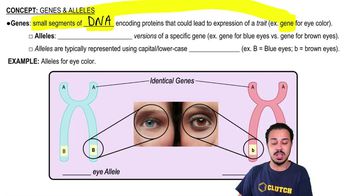
Genes are units of heredity made of DNA segments. Alleles are alternative versions of a gene.
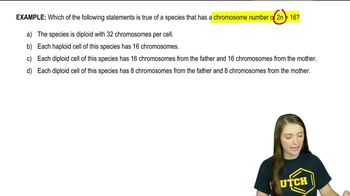
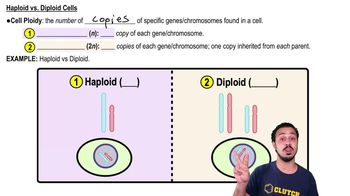
Haploid (n) cells have one set of chromosomes (23 in humans), like gametes. Diploid (2n) cells have two sets (46 in humans), like somatic cells.
Homologous chromosomes are pairs of chromosomes carrying genes for the same inherited characters, one from each parent.
A karyotype is an ordered display of chromosome pairs from a cell.
Sexual reproduction involves two parents and produces genetically unique offspring. Asexual reproduction involves one parent producing genetically identical offspring (clones).
Gametes (sperm and egg) are haploid cells produced by meiosis that fuse during fertilization to form a diploid zygote.
Meiosis reduces chromosome number from diploid to haploid through two consecutive divisions: meiosis I and meiosis II.
Homologous chromosomes pair up and crossing over occurs at chiasmata, exchanging DNA segments.
Synapsis is the tight pairing of homologous chromosomes held by the synaptonemal complex during Prophase I.
Pairs of homologous chromosomes line up at the metaphase plate, with microtubules attached to kinetochores of each homolog.
Homologous chromosomes separate and move to opposite poles; sister chromatids remain attached.
Two haploid daughter cells form, each with duplicated chromosomes consisting of sister chromatids.
Meiosis II separates sister chromatids into individual chromosomes, similar to mitosis, resulting in haploid cells.
Sister chromatids line up at the metaphase plate with kinetochores attached to microtubules from opposite poles.
Sister chromatids separate and move as individual chromosomes toward opposite poles.
Four genetically distinct haploid daughter cells, each with unreplicated chromosomes.
Genetic variation arises from crossing over, independent assortment of chromosomes, and random fertilization.
Crossing over produces recombinant chromosomes by exchanging DNA between nonsister chromatids during Prophase I.
During Metaphase I, homologous pairs orient randomly, sorting maternal and paternal chromosomes independently into daughter cells.