 Back
BackGeneral Biology Unit 3 Study Guide
 06:59
06:59
Terms in this set (21)
The Cambrian explosion was a brief period (~535–525 million years ago) when many present-day animal phyla first appeared, including the emergence of large, hard-bodied animals.
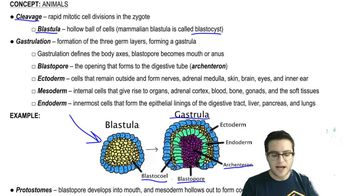
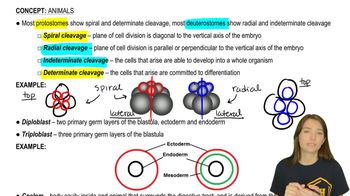
Bilaterians are animals with bilateral symmetry and three germ layers, representing a major clade in animal evolution.
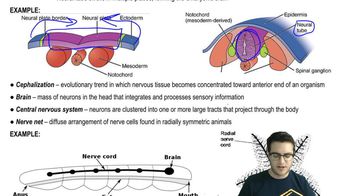
Chordates have a notochord, dorsal hollow nerve cord, pharyngeal slits or clefts, and a muscular post-anal tail at some stage of development.
Amniotes have an amniotic egg with specialized membranes, including the fluid-filled amnion, protecting the embryo; includes mammals, birds, and reptiles.
Negative feedback counteracts a change to maintain homeostasis, while positive feedback amplifies a change, often driving a process to completion.
Homeostasis is the steady-state physiological condition of the body, maintaining variables like temperature and solute concentration within set points.
A regulator maintains internal conditions despite external changes; a conformer’s internal conditions change with the environment.
Epithelial (lining), connective (support), muscle (movement), and nervous (signal transmission) tissues.
The endocrine system uses hormones secreted by glands to regulate internal processes and maintain homeostasis over longer timescales.
The nervous system provides fast, targeted communication via neurons, while the endocrine system uses slower, widespread hormonal signaling.
Thermoregulation is maintaining internal temperature; endotherms generate heat metabolically, ectotherms rely on external heat sources.
Ingestion (eating), digestion (breaking down food), absorption (nutrient uptake), and elimination (waste removal).
Substances animals cannot synthesize and must obtain preassembled from their diet, including essential amino acids, fatty acids, vitamins, and minerals.
Open systems bathe organs directly with hemolymph; closed systems confine blood to vessels, allowing more efficient transport.
Arteries carry blood away from the heart, capillaries enable exchange with tissues, and veins return blood to the heart.
Single circulation passes blood once through the heart per circuit (e.g., fish); double circulation has separate pulmonary and systemic circuits (e.g., mammals).
The alternating contraction (systole) and relaxation (diastole) phases of the heart that pump blood through the body.
Countercurrent exchange is the transfer of substances or heat between fluids flowing in opposite directions, maximizing diffusion efficiency, e.g., in fish gills.
Insulin lowers blood glucose by promoting uptake and storage; glucagon raises blood glucose by promoting glycogen breakdown and release.
Osmoregulation controls solute concentrations and water balance to maintain cellular function and homeostasis.
Filtration, reabsorption, secretion, and excretion, which together remove wastes and regulate body fluids.