
Pearson+ LogoPearson+ Logo
Ch. 7 - Inside the Cell
Freeman - Biological Science 7th Edition
Freeman7th EditionBiological ScienceISBN: 9783584863285Not the one you use?Change textbook
Chapter 7, Problem 6

Cells that line your intestines are known to possess a large number of membrane proteins that transport small molecules and ions across the plasma membrane. Which of the following cell structures would you expect to be required for this characteristic of the cells?
a. The endoplasmic reticulum
b. Peroxisomes
c. Lysosomes
d. The cell wall

Verified step by step guidance
1
Understand the role of membrane proteins: Membrane proteins are synthesized and processed in specific organelles within the cell. These proteins are essential for transporting small molecules and ions across the plasma membrane.
Analyze the function of the endoplasmic reticulum (ER): The ER, particularly the rough ER, is responsible for the synthesis of membrane-bound and secretory proteins. It is equipped with ribosomes that facilitate protein production.
Evaluate the role of peroxisomes: Peroxisomes are involved in the breakdown of fatty acids and detoxification of harmful substances. They are not directly involved in the synthesis or transport of membrane proteins.
Consider the function of lysosomes: Lysosomes are responsible for breaking down macromolecules and cellular waste. They do not play a role in the synthesis or transport of membrane proteins.
Assess the relevance of the cell wall: The cell wall is a structural component found in plant cells, fungi, and some prokaryotes. It does not contribute to the synthesis or transport of membrane proteins. Based on this analysis, the endoplasmic reticulum is the most relevant structure for this characteristic of intestinal cells.

Verified video answer for a similar problem:

This video solution was recommended by our tutors as helpful for the problem above.
Video duration:
28s
Was this helpful?

Key Concepts

Here are the essential concepts you must grasp in order to answer the question correctly.

Membrane Proteins

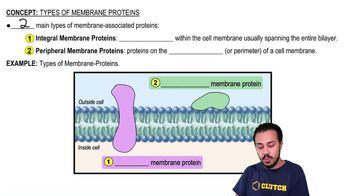
Membrane proteins are integral or peripheral proteins that reside within or on the surface of the cell membrane. They play crucial roles in transporting molecules and ions across the plasma membrane, facilitating communication and signaling between the cell and its environment. Their presence is essential for maintaining cellular homeostasis and enabling nutrient absorption in intestinal cells.
Recommended video:
Guided course
02:35
Types of Membrane Proteins

Endoplasmic Reticulum (ER)

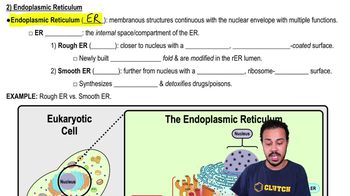
The endoplasmic reticulum (ER) is a network of membranes involved in the synthesis and transport of proteins and lipids. The rough ER, studded with ribosomes, is particularly important for producing membrane proteins, including those that transport molecules across the plasma membrane. This organelle is vital for the proper functioning of cells that require extensive transport mechanisms, such as intestinal epithelial cells.
Recommended video:
Guided course
06:07
Endoplasmic Reticulum

Cell Membrane Structure

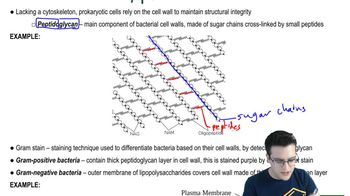
The cell membrane, composed of a phospholipid bilayer with embedded proteins, serves as a selective barrier that regulates the entry and exit of substances. Its structure allows for the formation of specialized regions where transport proteins can facilitate the movement of ions and small molecules. Understanding the cell membrane's architecture is essential for grasping how intestinal cells manage nutrient absorption and ion transport.
Recommended video:
Guided course
09:28
Prokaryotic Cell Structures 1
Related Practice
Textbook Question

Molecular zip codes direct molecules to particular destinations in the cell. How are these signals read?

a. They bind to receptor proteins.

b. They enter transport vesicles.

c. They bind to motor proteins.

d. They are glycosylated by enzymes.

1658
views
Textbook Question

How does the hydrolysis of ATP result in the movement of a motor protein along a cytoskeletal filament?

1607
views
Textbook Question

Which of the following cell structures would you expect to be most important in the growth of bacteria on the surface of your teeth?

a. Cell wall

b. Fimbriae

c. Flagella

d. Cilia

1434
views
Textbook Question

Most of the proteins that enter the nucleus possess a nuclear localization signal (NLS), even if they are small enough to pass through the nuclear pore complex unhindered. Why would a small protein have an NLS, when it naturally diffuses across the nuclear pore complex without one?

2004
views
Textbook Question

The eukaryotic cytoskeleton is a highly dynamic network of filaments and motor proteins. Which of the following correctly describe activities of these cytoskeletal components? Select True or False for each statement.

T/FMyosin motors walk toward the plus ends of intermediate filaments.

T/FDynein motors are responsible for the whip-like movement of eukaryotic flagella.

T/FKinesin motors move vesicles along tracks toward the microtubule-organizing center.

T/FActin filaments are required for cytoplasmic streaming.

1681
views
Textbook Question

When analyzing a sample of cells from a patient, you find the lysosomes are filled with undigested material. This observation makes you think that the lysosomes are not functioning properly. What are three different defects that could be responsible for malfunctioning lysosomes?

1326
views