Exercises 41–60 contain rational equations with variables in denominators. For each equation, a. write the value or values of the variable that make a denominator zero. These are the restrictions on the variable. b. Keeping the restrictions in mind, solve the equation. 5/2x - 8/9 = 1/18 - 1/3x

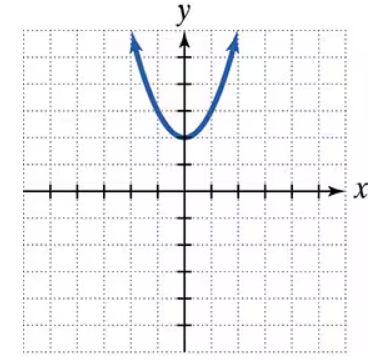
Use the graph to a. determine the x-intercepts, if any; b. determine the y-intercepts, if any. For each graph, tick marks along the axes represent one unit each.

Verified step by step guidance
Verified video answer for a similar problem:
Key Concepts
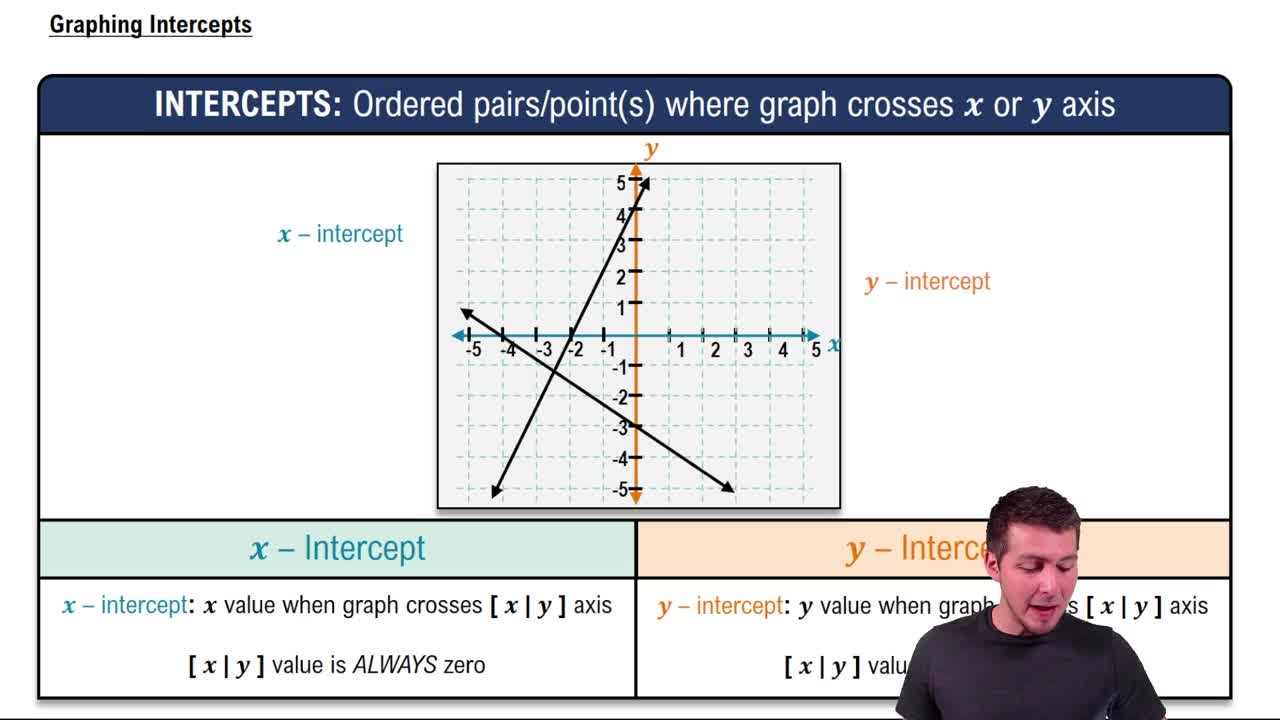
X-Intercepts
Y-Intercepts
Quadratic Functions
In all exercises, other than exercises with no solution, use interval notation to express solution sets and graph each solution set on a number line. In Exercises 27–50, solve each linear inequality. 4(3x - 2) - 3x < 3(1 + 3x) - 7
Use the graph to a. determine the x-intercepts, if any; b. determine the y-intercepts, if any. For each graph, tick marks along the axes represent one unit each.
In Exercises 45–47, solve each formula for the specified variable. T = (A-P)/Pr for P
Exercises 41–60 contain rational equations with variables in denominators. For each equation, a. write the value or values of the variable that make a denominator zero. These are the restrictions on the variable. b. Keeping the restrictions in mind, solve the equation. (x - 2)/2x + 1 = (x + 1)/x
In Exercises 45–47, solve each formula for the specified variable. vt + gt^2 = s for g
