The equations in Exercises 79–90 combine the types of equations we have discussed in this section. Solve each equation. Then state whether the equation is an identity, a conditional equation, or an inconsistent equation. 2/x + 1/2 = 3/4
Ch. 1 - Equations and Inequalities

Chapter 2, Problem 86
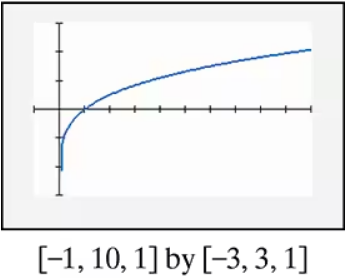
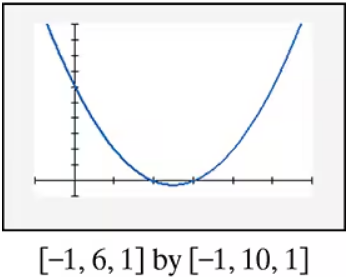
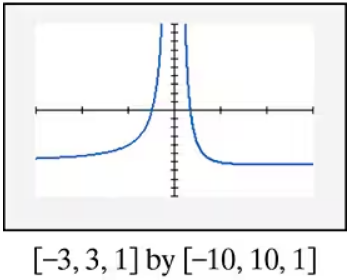
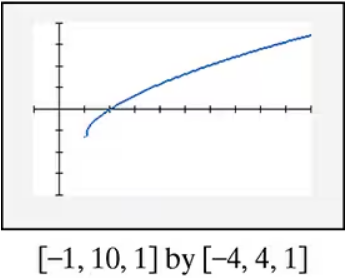
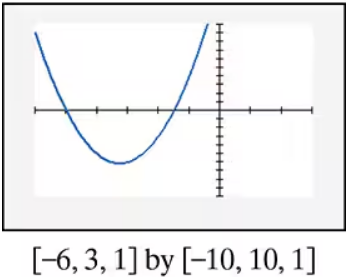
In Exercises 85–90, find the x-intercepts of the graph of each equation. Then use the x-intercepts to match the equation with its graph. [The graphs are labeled (a) through (f).]
a)
b)
c)
d)
e)
f) 
Verified step by step guidance1
To find the x-intercepts of the graph, set the equation equal to zero because x-intercepts occur where the graph crosses the x-axis, meaning \(y = 0\). So, start with the equation: \(0 = \sqrt{\,x - 4\,} + \sqrt{\,x + 4\,} - 4\).
Isolate the square root terms on one side to simplify the equation. Add 4 to both sides to get: \(4 = \sqrt{\,x - 4\,} + \sqrt{\,x + 4\,}\).
To eliminate the square roots, consider squaring both sides of the equation. Remember, when squaring, use the formula \((a + b)^2 = a^2 + 2ab + b^2\). So, square both sides: \(4^2 = (\sqrt{\,x - 4\,} + \sqrt{\,x + 4\,})^2\).
Expand the right side using the formula: \(16 = (x - 4) + 2\sqrt{(x - 4)(x + 4)} + (x + 4)\). Simplify the terms without the square root: \(16 = 2x + 2\sqrt{(x - 4)(x + 4)}\).
Isolate the square root term: \(16 - 2x = 2\sqrt{(x - 4)(x + 4)}\). Then divide both sides by 2: \(\frac{16 - 2x}{2} = \sqrt{(x - 4)(x + 4)}\). This simplifies to \(8 - x = \sqrt{x^2 - 16}\). Next, square both sides again to eliminate the square root and solve for \(x\).

Verified video answer for a similar problem:
This video solution was recommended by our tutors as helpful for the problem above.
Video duration:
1mWas this helpful?
Key Concepts
Here are the essential concepts you must grasp in order to answer the question correctly.
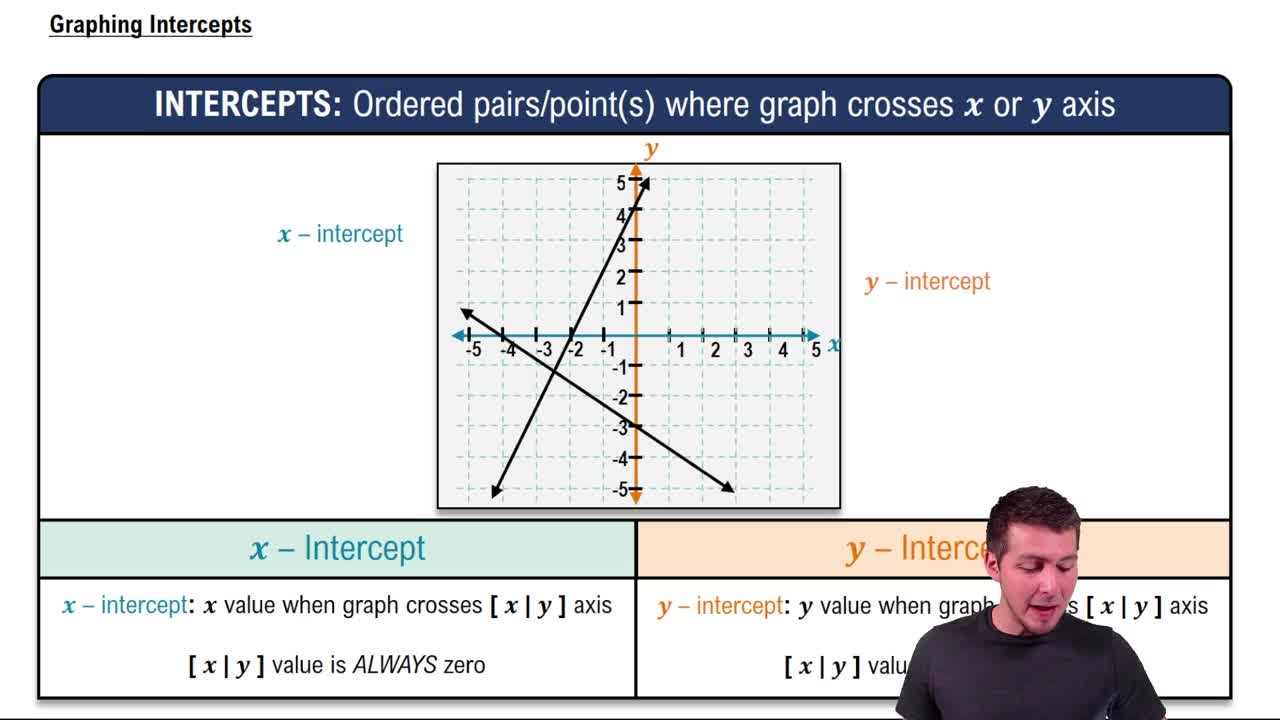
Finding x-intercepts
X-intercepts are points where the graph crosses the x-axis, meaning the y-value is zero. To find them, set y = 0 in the equation and solve for x. This helps identify key points that characterize the graph's shape and position.
Recommended video:
Guided course
Graphing Intercepts
Domain of Radical Functions
For functions involving square roots, the expression inside the root must be non-negative to yield real values. Determining the domain involves solving inequalities like x - 4 ≥ 0 and x + 4 ≥ 0, which restricts the possible x-values and affects where the graph exists.
Recommended video:
Domain Restrictions of Composed Functions
Graph Matching Using Intercepts
Matching equations to graphs often relies on key features like intercepts and domain restrictions. By finding x-intercepts and understanding the domain, you can compare these points and intervals to the given graphs to identify the correct match.
Recommended video:
Guided course
Graphing Intercepts
Related Practice
Textbook Question
767
views
Textbook Question
Solve each equation in Exercises 83–108 by the method of your choice.
942
views
Textbook Question
The equations in Exercises 79–90 combine the types of equations we have discussed in this section. Solve each equation. Then state whether the equation is an identity, a conditional equation, or an inconsistent equation. 4/(x - 2) + 3/(x + 5) = 7/(x + 5)(x - 2)
992
views
Textbook Question
In Exercises 59–94, solve each absolute value inequality. 5 > |4 - x|
753
views
Textbook Question
Solve each equation in Exercises 83–108 by the method of your choice.
969
views
Textbook Question
Solve each polynomial equation in Exercises 86–87. 2x^4 = 50 x^2
576
views