Skip to main content
General Chemistry
My Course
Learn
Exam Prep
AI Tutor
Study Guides
Textbook Solutions
Flashcards
Explore
Try the app
My Course
Learn
Exam Prep
AI Tutor
Study Guides
Textbook Solutions
Flashcards
Explore
Try the app
Back
Combustion Analysis quiz #2
You can tap to flip the card.
Which oil can spontaneously ignite on rags left in the open?
You can tap to flip the card.
👆
Which oil can spontaneously ignite on rags left in the open?
Linseed oil can spontaneously ignite.
Track progress
Control buttons has been changed to "navigation" mode.
1/15
Related flashcards
Related practice
Recommended videos
Combustion Analysis definitions
Combustion Analysis
13 Terms
Combustion Analysis quiz
Combustion Analysis
9 Terms
Combustion Analysis quiz #1
Combustion Analysis
40 Terms
Combustion Analysis
3. Chemical Reactions
5 problems
Topic
Jules
3. Chemical Reactions - Part 1 of 3
5 topics
13 problems
Chapter
Jules
3. Chemical Reactions - Part 2 of 3
6 topics
13 problems
Chapter
Jules
3. Chemical Reactions - Part 3 of 3
5 topics
13 problems
Chapter
Jules
Guided course
01:29
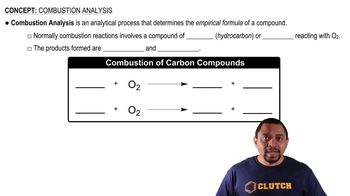
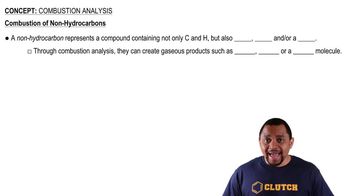
Combustion of Non-Hydrocarbons
4025
views
41
rank
1
comments
Guided course
02:09
Empirical Formula via Combustion
7515
views
84
rank
1
comments
Guided course
05:47
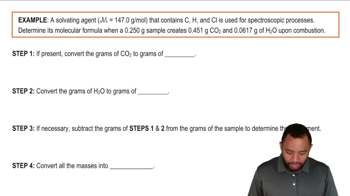
Molecular Formula via Combustion Example
2960
views
33
rank
3
comments
Terms in this set (15)
Hide definitions
Which oil can spontaneously ignite on rags left in the open?
Linseed oil can spontaneously ignite.
What is the most likely cause of flames that are lifting off the burner?
Insufficient oxygen supply or improper air-fuel mixture.
Which product of incomplete combustion gives photochemical smog its yellowish color?
Nitrogen dioxide (NO2) gives smog its yellowish color.
What is the temperature at which sustained combustion will occur called?
It is called the ignition temperature.
What are some toxic and hazardous products of combustion?
Some products, like CO and NO2, are toxic and hazardous to health.
What is another name for combustion?
Combustion is also called burning.
When propanol (C3H7OH) is burned in excess oxygen, what is/are the product(s) of this reaction?
The products are carbon dioxide (CO2) and water (H2O).
When a hydrocarbon burns in air, what component of air reacts?
Oxygen (O2) is the reacting component.
When a hydrocarbon burns in air, a component produced is ________.
Carbon dioxide (CO2) is produced.
If a substance reacts with oxygen, the chemical reaction is most likely a ________.
Combustion reaction.
What is combustion in the carbon cycle?
Combustion releases carbon from organic matter as CO2 into the atmosphere.
Why was kerosene commonly used in lamps?
Because it burns easily and produces a steady flame.
A fuel combines with oxygen to produce carbon dioxide (CO2) and water (H2O). What type of reaction is this?
This is a combustion reaction.
How do you solve combustion thermochemistry problems?
By using balanced equations and stoichiometry to relate reactants and products.
What is the ability to support burning called?
It is called combustibility.
 BackBack
 01:29
01:29