Endothermic & Exothermic Reactions quiz #2 Flashcards

Endothermic & Exothermic Reactions quiz #2
Control buttons has been changed to "navigation" mode.
1/40
  • If the ΔH = -890.3 kJ/mol, is the reaction exothermic or endothermic?

    The reaction is exothermic because ΔH is negative.
  • Which label shows the overall enthalpy change and is the reaction exothermic or endothermic?

    A negative ΔH label indicates an exothermic reaction; positive ΔH indicates endothermic.
  • Which of these processes is endothermic?

    Melting, vaporization, and sublimation are endothermic processes.
  • Which energy change is caused by an endothermic chemical reaction?

    Energy is absorbed from the surroundings, increasing the system's energy.
  • Which process below is an example of an endothermic process?

    Boiling water is an example of an endothermic process.
  • In which type of chemical reaction is heat absorbed from the surroundings?

    Heat is absorbed in endothermic chemical reactions.
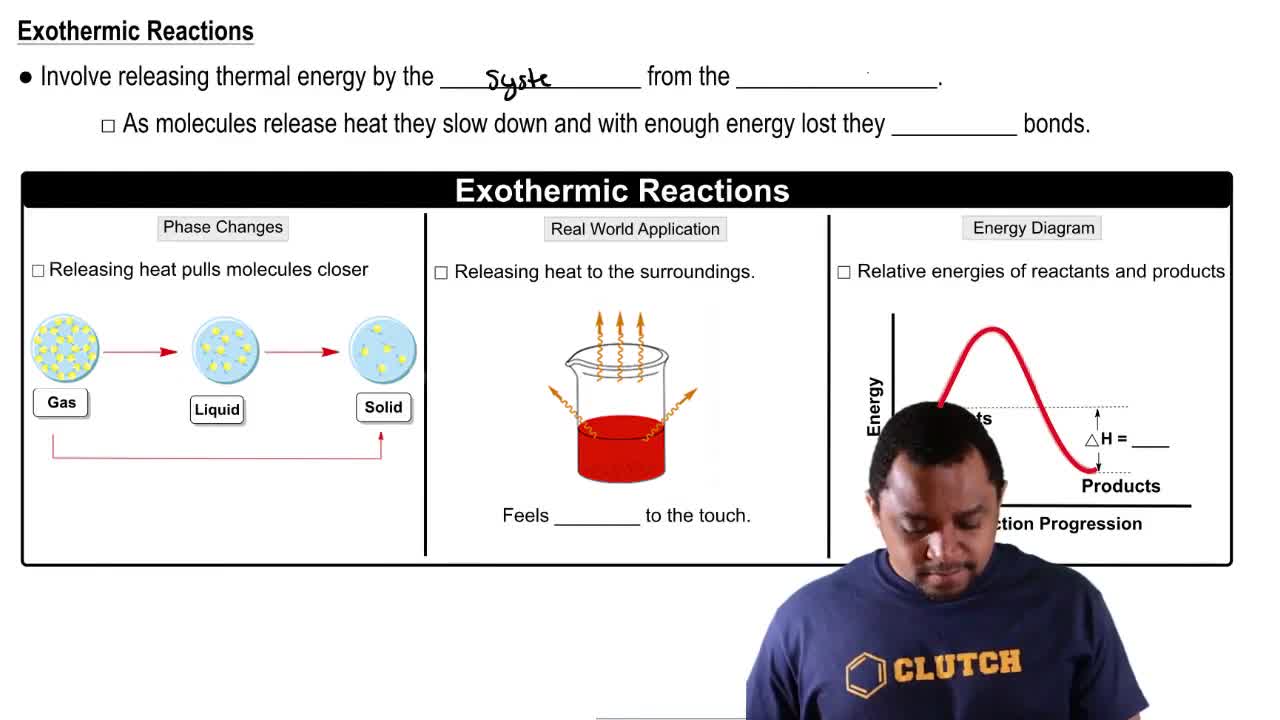
  • What happens to energy in an exothermic reaction?

    Energy is released to the surroundings.
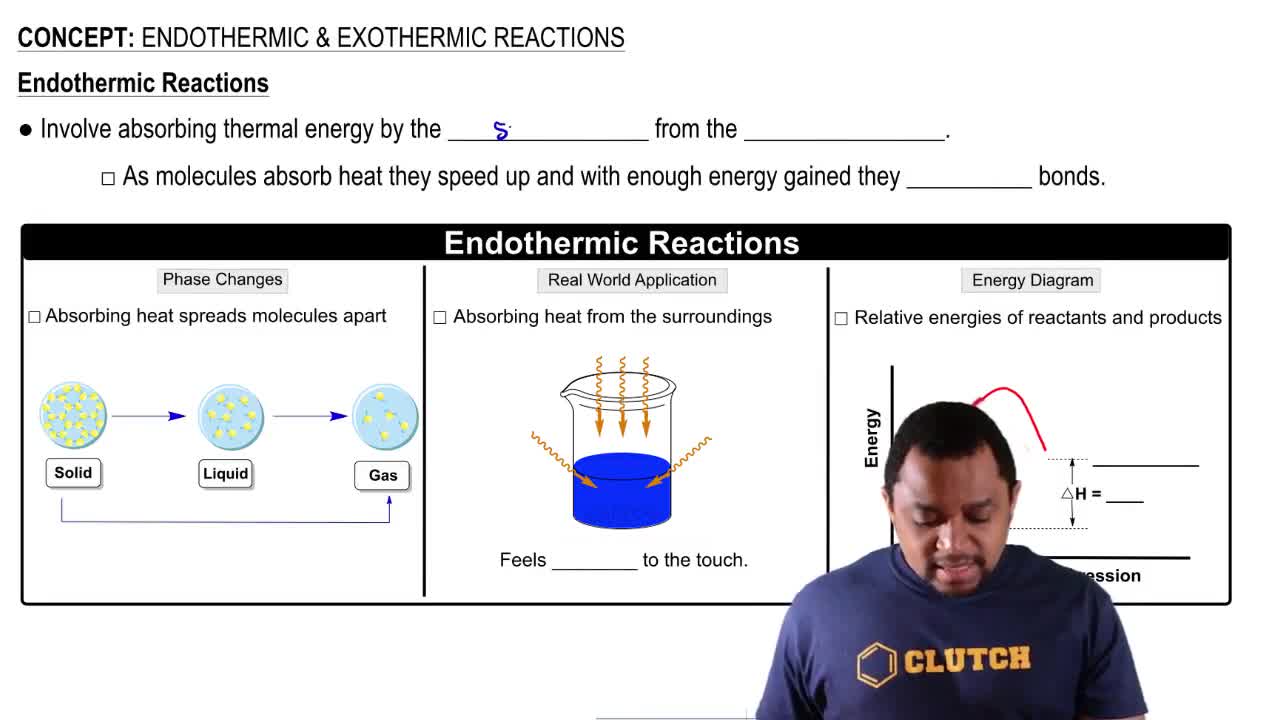
  • What happens during an endothermic reaction?

    Heat is absorbed, causing molecules to gain energy and break bonds.
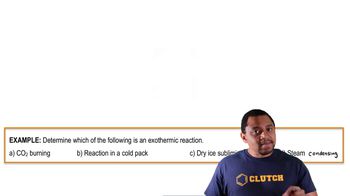
  • Which one of the following is an exothermic process?

    Condensation, freezing, and deposition are exothermic processes.
  • What defines an exothermic reaction?

    An exothermic reaction releases heat to the surroundings.
  • What happens during an exothermic reaction?

    Heat is released, and the surroundings become warmer.
  • What occurs in endothermic reactions?

    Heat is absorbed, and the system's energy increases.
  • Which example is an endothermic process?

    Melting ice is an endothermic process.
  • What type of reaction occurs in a hand warmer?

    An exothermic reaction occurs, releasing heat.
  • What type of reaction absorbs heat?

    Endothermic reactions absorb heat.
  • How is a reaction described when a chemical reaction uses up energy?

    It is described as an endothermic reaction.
  • When does the breaking of chemical bonds release energy?

    Breaking bonds usually requires energy; forming bonds releases energy.
  • When energy is absorbed in a process, what type of reaction is it?

    It is an endothermic reaction.
  • Which energy change takes place when gasoline evaporates from a fuel gas can?

    Evaporation is endothermic; energy is absorbed from the surroundings.
  • Which of the following describes an exothermic reaction?

    A reaction that releases heat and feels warm to the touch.
  • Which type of reaction occurs when energy is absorbed in the process?

    An endothermic reaction occurs when energy is absorbed.
  • What is indicated by a fire that flares up when water is applied to it?

    An exothermic reaction is occurring, releasing heat.
  • What does an exothermic reaction do?

    It releases heat to the surroundings.
  • What usually happens to temperature during an endothermic reaction?

    The temperature of the surroundings decreases.
  • What is absorbed by an endothermic reaction?

    Thermal energy (heat) is absorbed.
  • Which changes of state result in a decrease in the kinetic energy of the particles?

    Freezing, condensation, and deposition decrease kinetic energy.
  • In an endothermic reaction, what happens to the system?

    The system absorbs heat and its energy increases.
  • Which energy change occurs during the burning of magnesium ribbon?

    Burning magnesium is exothermic; energy is released.
  • What kind of energy change occurs during an endothermic reaction?

    Energy is absorbed from the surroundings.
  • What is released by an exothermic reaction?

    Heat energy is released.
  • Where does the energy come from that is needed for an endothermic reaction?

    Energy comes from the surroundings.
  • Which type of reaction absorbs heat energy from its surroundings?

    Endothermic reactions absorb heat energy.
  • What type of chemical reaction absorbs energy and requires energy for the reaction to occur?

    Endothermic chemical reactions absorb and require energy.
  • Which form of energy is produced by an exothermic reaction?

    Thermal energy (heat) is produced.
  • Which physical change is endothermic?

    Melting is an endothermic physical change.
  • Which process is exothermic?

    Freezing is an exothermic process.
  • Does an endothermic reaction absorb or release heat?

    An endothermic reaction absorbs heat.
  • Which transfer of energy occurs when ice cubes are placed in water that has a temperature of 45°C?

    Heat transfers from the water to the ice (endothermic for the ice).
  • Which statement describes an exothermic reaction?

    An exothermic reaction releases heat to the surroundings.
  • What is the term for chemical reactions that absorb energy?

    Endothermic reactions.