Pearson+ LogoPearson+ Logo
Back

Redox Reactions quiz #3

Control buttons has been changed to "navigation" mode.
1/21
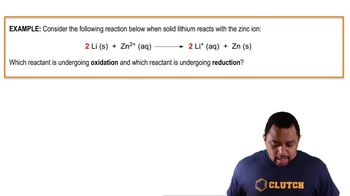
  • Complete the statements about the redox reaction below.

    Identify which species is oxidized (loses electrons) and which is reduced (gains electrons).
  • Determine the activation energy for the redox reaction Q− + 2 R+ → Q+ + 2 R−.

    Activation energy is the minimum energy required for the redox reaction to occur.
  • Redox reactions involve a transfer of _____ from one atom to another.

    Electrons.
  • Write the half reactions as they occur at each electrode.

    At the anode: oxidation half-reaction (electron loss); at the cathode: reduction half-reaction (electron gain).
  • Separate the redox reaction into its component half-reactions.

    Write one half-reaction for oxidation (electron loss) and one for reduction (electron gain).
  • What happens to the oxidation number of a substance that is oxidized in a redox reaction?

    The oxidation number increases as the substance loses electrons.
  • How does gaining electrons affect the charge and oxidation number of a substance?

    Gaining electrons makes the substance more negative and decreases its oxidation number.
  • What is the relationship between the reducing agent and oxidation in a redox reaction?

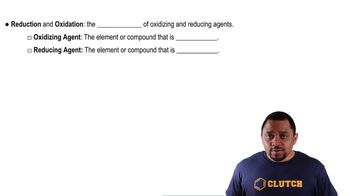
    The reducing agent is the substance that is oxidized, meaning it loses electrons.
  • If a substance acts as the oxidizing agent in a redox reaction, what happens to it?

    It is reduced, meaning it gains electrons and its oxidation number decreases.
  • Why does losing electrons make a substance more positive in terms of charge?

    Because electrons are negatively charged, losing them removes negative charge, resulting in a more positive overall charge.
  • In redox reactions, oxidation is the process of ______ and reduction is the process of ______.

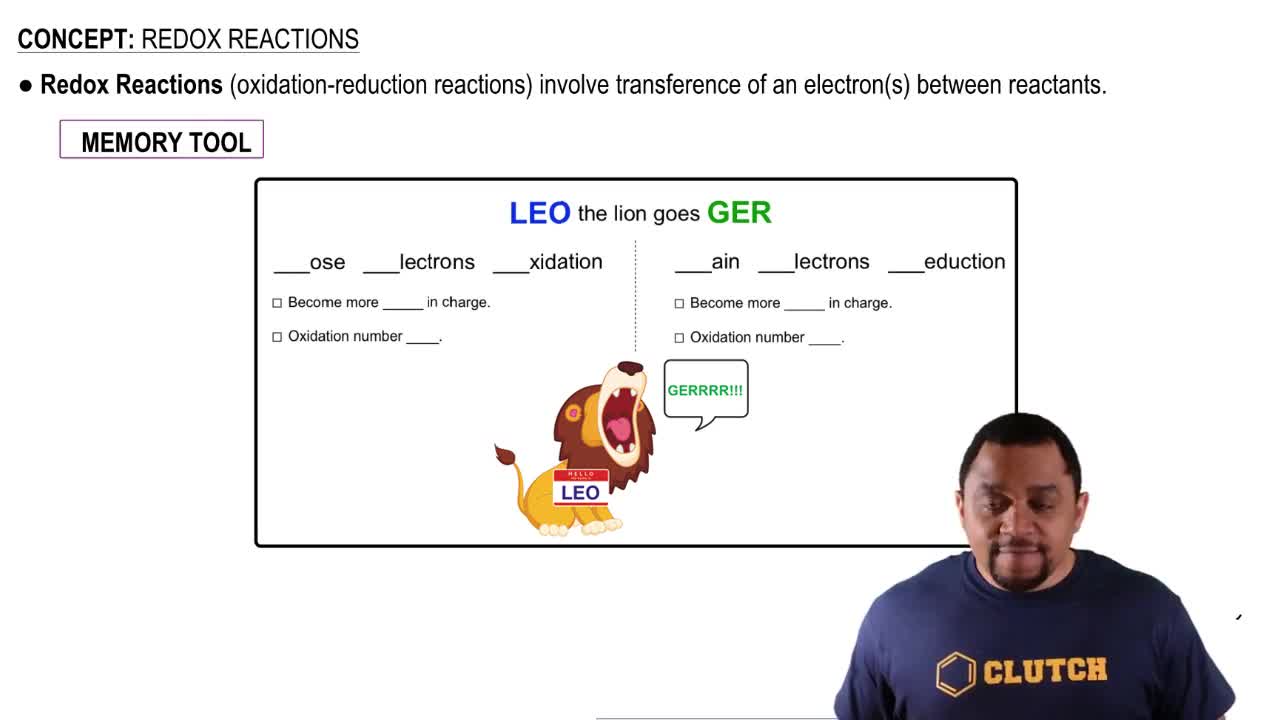
    Oxidation is the loss of electrons, and reduction is the gain of electrons.
  • What defines an oxidation-reduction (redox) reaction in chemistry?

    A redox reaction is a chemical reaction in which electrons are transferred between substances, resulting in changes to their oxidation states.
  • Which species acts as the reducing agent in a redox reaction?

    The reducing agent is the species that is oxidized; it loses electrons and causes another species to be reduced.
  • Which term best describes the process of reduction in a redox reaction?

    Reduction is the gain of electrons, resulting in a decrease in oxidation number and making the substance more negative.
  • How can you identify a redox reaction based on changes in oxidation numbers?

    A redox reaction involves changes in oxidation numbers of elements, indicating that electrons have been transferred between reactants.
  • What is the role of the oxidizing agent in a redox reaction?

    The oxidizing agent is the species that is reduced; it gains electrons and causes another species to be oxidized.
  • Which half-reaction correctly represents reduction?

    A reduction half-reaction shows a species gaining electrons, resulting in a decrease in its oxidation number.
  • What mnemonic can help you remember the definitions of oxidation and reduction?

    The mnemonic 'LEO the lion says GER' helps: Lose Electrons Oxidation (LEO), Gain Electrons Reduction (GER).
  • How does the oxidation number of a substance change during oxidation?

    During oxidation, the oxidation number of a substance increases as it loses electrons.
  • How does the oxidation number of a substance change during reduction?

    During reduction, the oxidation number of a substance decreases as it gains electrons.
  • What is an example of a reduction process in terms of electron transfer?

    An example of reduction is when a species gains electrons, such as when a metal ion is converted to its elemental form by accepting electrons.