
Based on the following reaction profile, how many intermediates are formed in the reaction A¡C? How many transition states are there? Which step, A¡B or B¡C, is the faster? For the reaction A¡C, is ΔE positive, negative, or zero? [Section 14.6]
(c) Is the rate of disappearance of reactants always the same as the rate of appearance of products?
Verified step by step guidanceKey Concepts
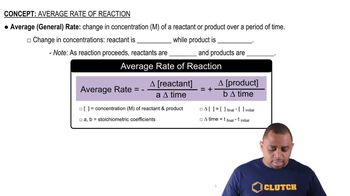
Reaction Rates
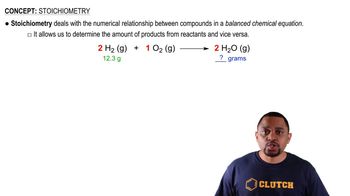
Stoichiometry
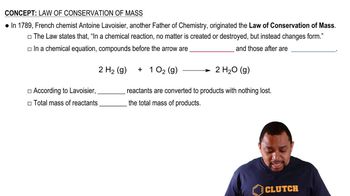
Conservation of Mass
The following graph shows two different reaction pathways for the same overall reaction at the same temperature. Is each of the following statements true or false? (b) For both paths, the rate of the reverse reaction is slower than the rate of the forward reaction.
(b) Name three factors that can affect the rate of a chemical reaction.
(b) As the temperature increases, does the reaction rate increase or decrease?
Consider the diagram that follows, which represents two steps in an overall reaction. The red spheres are oxygen, the blue ones nitrogen, and the green ones fluorine. (d) Write the rate law for the overall reaction if the first step is the slow, rate-determining step. [Section 14.6]
(a) What are the units usually used to express the rates of reactions occurring in solution?
