
Determine the empirical and molecular formulas of each of the following substances: (a) Styrene, a compound used to make Styrofoam® cups and insulation, contains 92.3% C and 7.7% H by mass and has a molar mass of 104 g/mol.
Determine the empirical and molecular formulas of each of the following substances: (c) Monosodium glutamate (MSG), a flavor enhancer in certain foods, contains 35.51% C, 4.77% H, 37.85% O, 8.29% N, and 13.60% Na, and has a molar mass of 169 g/mol.
Verified step by step guidance
Verified video answer for a similar problem:
Key Concepts
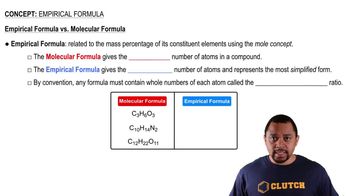
Empirical Formula
Molecular Formula
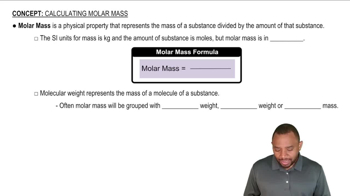
Molar Mass
Determine the empirical and molecular formulas of each of the following substances: (a) Ibuprofen, a headache remedy, contains 75.69% C, 8.80% H, and 15.51% O by mass and has a molar mass of 206 g/mol.
Determine the empirical and molecular formulas of each of the following substances: (b) Caffeine, a stimulant found in coffee, contains 49.5% C, 5.15% H, 28.9% N, and 16.5% O by mass and has a molar mass of 195 g/mol.
What is the molecular formula of each of the following compounds? (b) empirical formula C2H4O, molar mass = 88.0 g/mol
(a) Combustion analysis of toluene, a common organic solvent, gives 5.86 mg of CO2 and 1.37 mg of H2O. If the compound contains only carbon and hydrogen, what is its empirical formula?
Determine the empirical and molecular formulas of each of the following substances: (b) Cadaverine, a foul-smelling substance produced by the action of bacteria on meat, contains 58.55% C, 13.81% H, and 27.40% N by mass; its molar mass is 102.2 g/mol.
