
Textbook Question
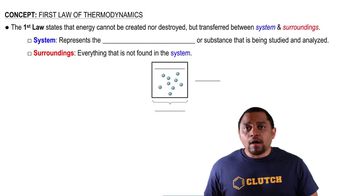
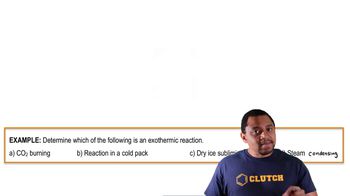
(c) By what means can the internal energy of a closed system increase?
606
views

 Verified step by step guidance
 01:18
01:18
 01:23
01:23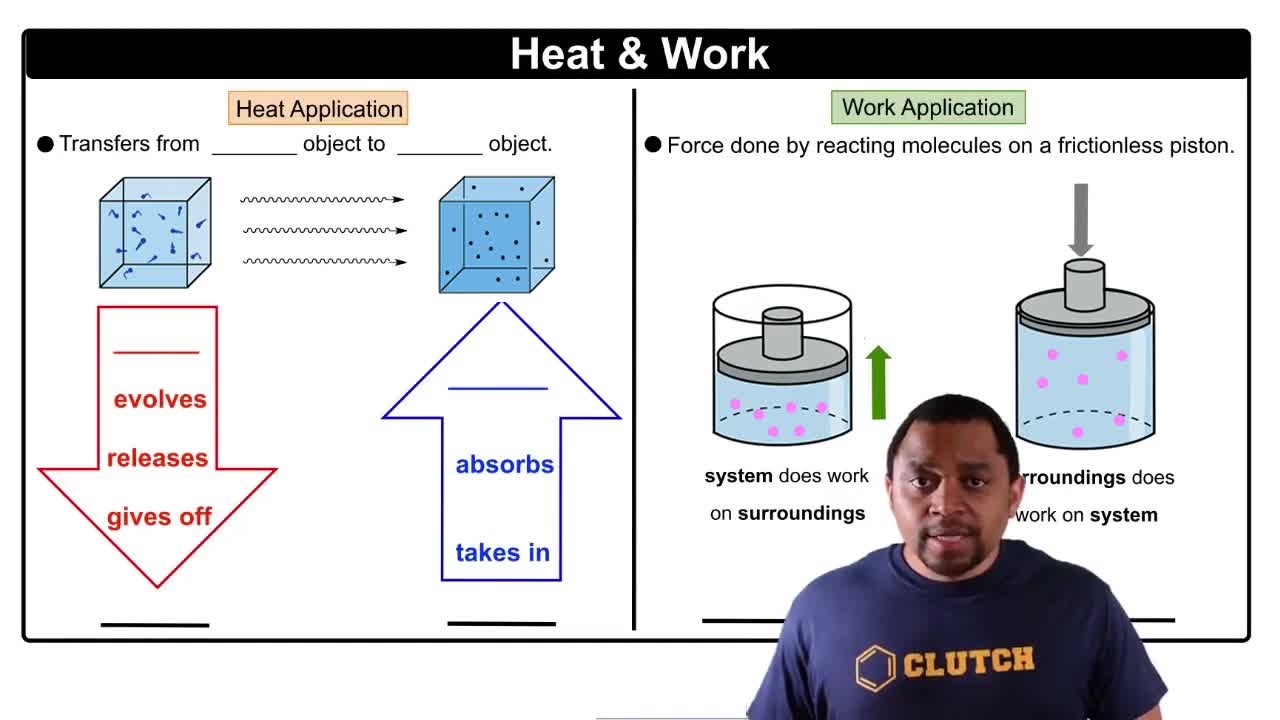 02:50
02:50(c) By what means can the internal energy of a closed system increase?
A gas is confined to a cylinder fitted with a piston and an electrical heater, as shown here:
Suppose that current is supplied to the heater so that 100 J of energy is added. Consider two different situations. In case (1) the piston is allowed to move as the energy is added. In case (2) the piston is fixed so that it cannot move. (b) Identify the sign (positive, negative, or zero) of q and w in each case?
Consider a system consisting of two oppositely charged spheres hanging by strings and separated by a distance r1, as shown in the accompanying illustration. Suppose they are separated to a larger distance r2, by moving them apart. (a) What change, if any, has occurred in the potential energy of the system?
Calculate ΔE and determine whether the process is endothermic or exothermic for the following cases: (a) q = 0.763 kJ and w = -840 J.
A gas is confined to a cylinder fitted with a piston and an electrical heater, as shown here:
Suppose that current is supplied to the heater so that 100 J of energy is added. Consider two different situations. In case (1) the piston is allowed to move as the energy is added. In case (2) the piston is fixed so that it cannot move. (a) In which case does the gas have the higher temperature after addition of the electrical energy?