
Write balanced molecular and net ionic equations for the following reactions, and identify the gas formed in each: (a) solid cadmium sulfide reacts with an aqueous solution of sulfuric acid (b) solid magnesium carbonate reacts with an aqueous solution of perchloric acid.

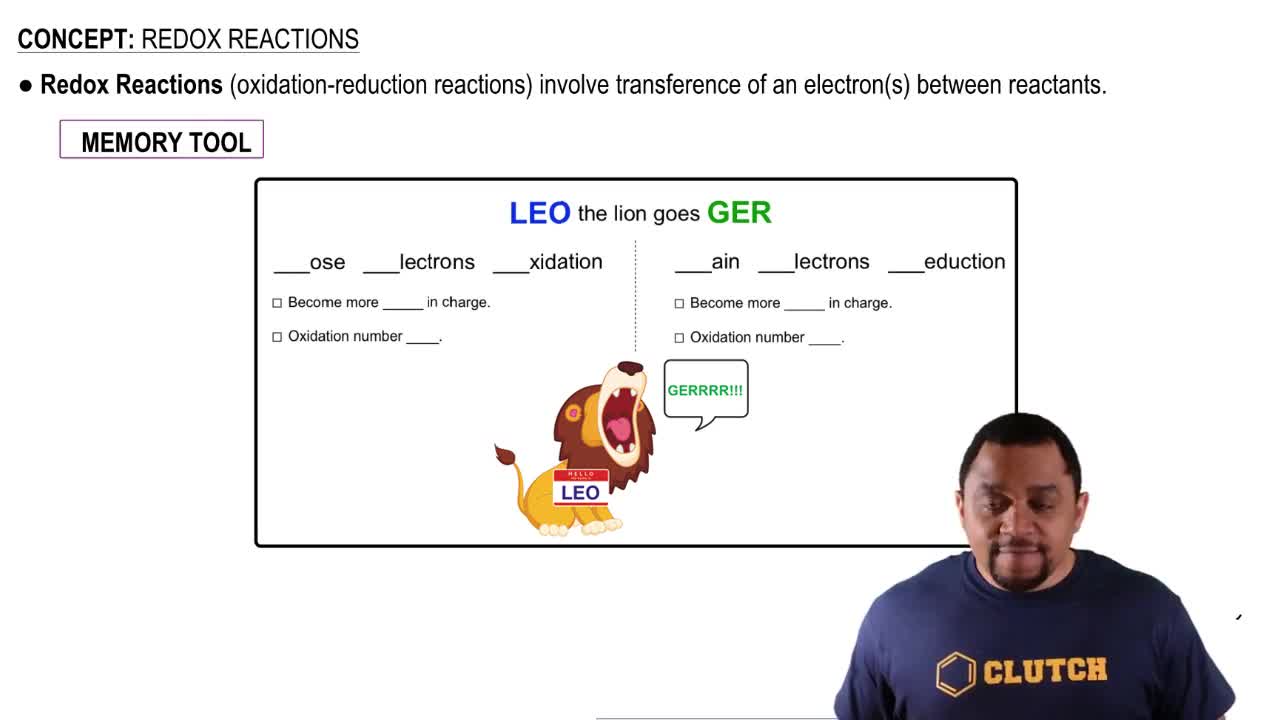
True or false: a. If a substance is oxidized, it is gaining electrons.
Verified step by step guidance
Verified video answer for a similar problem:
Key Concepts
Oxidation and Reduction
Electron Transfer
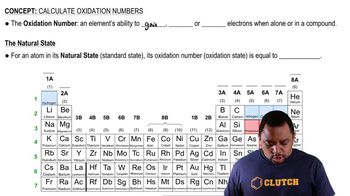
Oxidation States
Determine the oxidation number for the indicated element in each of the following substances: a. S in SO2
(a) Which region of the periodic table shown here contains elements that are easiest to oxidize? (b) Which region contains the least readily oxidized elements?
Determine the oxidation number of sulfur in each of the following substances: (a) barium sulfate, BaSO4 (b) sulfurous acid, H2SO3 (c) strontium sulfide, SrS
Because the oxide ion is basic, metal oxides react readily with acids. (a) Write the net ionic equation for the following reaction: FeO(s) + 2 HClO4(aq) → Fe(ClO4)2(aq) + H2O(l) (b) Based on the equation in part (a), write the net ionic equation for the reaction that occurs between NiO(s) and an aqueous solution of nitric acid.
