
Textbook Question
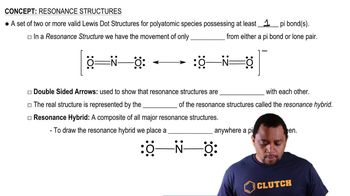
Draw the Lewis structure for each organic compound from its condensed structural formula. c. CH3COCH3
741
views

 Verified step by step guidance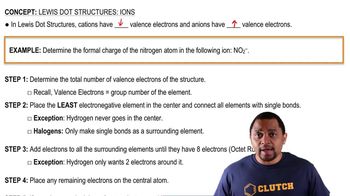
 04:28
04:28
 01:42 01:42
Draw the Lewis structure for each organic compound from its condensed structural formula. c. CH3COCH3
Diazomethane is a highly poisonous, explosive compound because it readily evolves N2. Diazomethane has the following composition by mass: 28.57% C; 4.80% H; and 66.64% N. The molar mass of diazomethane is 42.04 g/mol. Find the molecular formula of diazomethane, draw its Lewis structure, and assign formal charges to each atom. Why is diazomethane not very stable? Explain.
Formic acid is responsible for the sting of ant bites. By mass, formic acid is 26.10% C, 4.38% H, and 69.52% O. The molar mass of formic acid is 46.02 g/mol. Determine the molecular formula of formic acid and draw its Lewis structure.
The cyanate ion (OCN-) and the fulminate ion (CNO-) share the same three atoms but have vastly different properties. The cyanate ion is stable, while the fulminate ion is unstable and forms explosive compounds. The resonance structures of the cyanate ion are explored in Example 9.8. Draw Lewis structures for the fulminate ion—including possible resonance forms— and use formal charge to explain why the fulminate ion is less stable (and therefore more reactive) than the cyanate ion.
NaCl has a lattice energy of -787 kJ/mol. Consider a hypothetical salt XY. X3+ has the same radius of Na+ and Y3- has the same radius as Cl-. Estimate the lattice energy of XY.
Draw the Lewis structure for each organic compound from its condensed structural formula. b. CH3OCH3