Pearson+ LogoPearson+ Logo

Genomics and Human Medicine quiz #1 Flashcards

Back
Genomics and Human Medicine quiz #1
Control buttons has been changed to "navigation" mode.
1/10
  • What is gene therapy and how is it used in human medicine?

    Gene therapy is a medical technique that aims to treat or potentially cure diseases by delivering correct versions of mutated genes into a patient's cells. This is often achieved using modified viruses or liposomes to carry the healthy gene, allowing the cells to produce the correct protein and overcome the effects of the mutation. Gene therapy has applications in diseases such as cystic fibrosis, where the correct CFTR gene can be delivered to lung cells.
  • What surprising discovery did the Human Genome Project make about the proportion of protein-coding regions in the human genome?

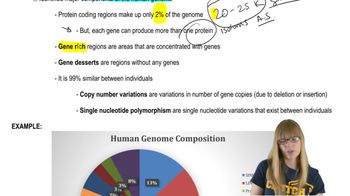
    The Human Genome Project found that only about 2% of the human genome encodes protein-coding genes. The remaining 98% consists of non-coding regions with important functions.
  • How do gene deserts and gene-rich regions differ in the human genome?

    Gene-rich regions are concentrated areas with many genes, while gene deserts are regions with few or no genes. This uneven distribution was revealed by genome sequencing efforts.
  • What are copy number variations and how do they contribute to genetic diversity?

    Copy number variations are differences in the number of copies of a particular gene between individuals. They are a major source of genetic variation, even among identical twins.
  • What is the role of the ENCODE Project in genomics research?

    The ENCODE Project aims to identify and classify regulatory elements such as enhancers and promoters in the human genome. This helps scientists understand gene regulation and its impact on disease.
  • What are pseudogenes and how do they arise in the genome?

    Pseudogenes are DNA sequences that resemble functional genes but are inactive due to mutations or insertions. They were once functional genes but lost their activity over time.
  • How are transgenic organisms created in the laboratory?

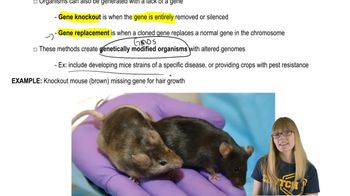
    Transgenic organisms are created by introducing foreign DNA into an organism, often using gene addition, gene knock-in, or gene knockout techniques. These methods allow scientists to study gene function and disease.
  • What is the difference between gene addition and gene knock-in in creating transgenic organisms?

    Gene addition involves inserting a gene anywhere in the genome, while gene knock-in targets a specific site for insertion. Gene knock-in is more precise and often ensures proper gene expression.
  • How are viruses modified for use in gene therapy?

    Viruses used in gene therapy are stripped of their original DNA, leaving only the protein capsid. Scientists then insert the therapeutic gene, allowing the virus to deliver it to target cells without causing disease.
  • Why are liposomes used as a non-viral method in gene therapy?

    Liposomes are lipid-encapsulated vesicles that can carry therapeutic genes into cells. They offer a safer alternative to viral vectors and are used to deliver genes to specific tissues, such as lung cells in cystic fibrosis.