Pearson+ LogoPearson+ Logo
Ch. 11 - Chromosome Structure and DNA Sequence Organization
Klug - Essentials of Genetics 10th Edition
Klug10th EditionEssentials of GeneticsISBN: 9780135588789Not the one you use?Change textbook
Chapter 11, Problem 4

Describe the structure of giant polytene chromosomes and how they arise.

Verified step by step guidance
1
Begin by explaining that giant polytene chromosomes are oversized chromosomes commonly found in the salivary glands of certain dipteran insects, such as Drosophila larvae, and are visible under a light microscope due to their large size.
Describe the structure of polytene chromosomes as consisting of many identical chromatids aligned side by side, resulting from repeated rounds of DNA replication without cell division, a process called endoreplication or endomitosis.
Explain that these chromosomes display characteristic banding patterns, with alternating dark and light bands representing regions of tightly packed (heterochromatin) and loosely packed (euchromatin) DNA, respectively.
Discuss how the multiple chromatids remain synapsed (paired) along their length, which allows for the visualization of specific gene loci and chromosomal puffs, where active transcription occurs.
Summarize that giant polytene chromosomes arise through repeated rounds of DNA replication without mitosis, leading to many sister chromatids aligned in parallel, creating their distinctive large, banded appearance.

Verified video answer for a similar problem:

This video solution was recommended by our tutors as helpful for the problem above.
Video duration:
55s
Was this helpful?

Key Concepts

Here are the essential concepts you must grasp in order to answer the question correctly.

Polytene Chromosome Structure

Polytene chromosomes are oversized chromosomes consisting of many identical chromatids aligned side-by-side, resulting from repeated rounds of DNA replication without cell division. They display characteristic banding patterns visible under a microscope, which correspond to regions of gene activity and chromatin organization.
Recommended video:
Guided course
07:10
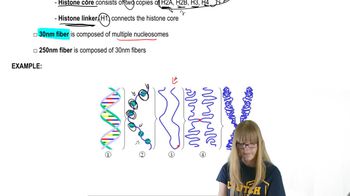
Chromosome Structure

Endoreplication (Endoreduplication)

Endoreplication is a process where DNA replicates multiple times without subsequent mitosis or cytokinesis, leading to polyploidy within a single nucleus. This mechanism produces the multiple chromatids that form the giant polytene chromosomes, commonly found in certain tissues like salivary glands of Drosophila.

Functional Significance of Polytene Chromosomes

Polytene chromosomes facilitate high levels of gene expression by providing multiple copies of genes in a single nucleus, aiding in rapid protein synthesis. Their distinct banding patterns also allow researchers to study gene activity, chromosomal rearrangements, and developmental regulation.
Recommended video:
Guided course
08:26
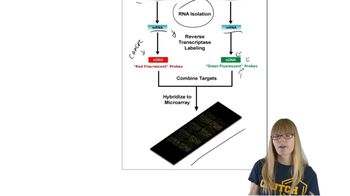
Functional Genomics