Pearson+ LogoPearson+ Logo
Ch. 19 - The Genetics of Cancer
Klug - Essentials of Genetics 10th Edition
Klug10th EditionEssentials of GeneticsISBN: 9780135588789Not the one you use?Change textbook
Chapter 19, Problem 8

What is apoptosis, and under what circumstances do cells undergo this process?

Verified step by step guidance
1
Understand that apoptosis is a form of programmed cell death, a controlled process by which cells orderly dismantle themselves without causing harm to the surrounding tissue.
Recognize that apoptosis is different from necrosis, which is uncontrolled cell death due to injury or damage.
Identify the key circumstances under which cells undergo apoptosis, such as during normal development (e.g., shaping organs), eliminating damaged or infected cells, and maintaining tissue homeostasis.
Note that apoptosis can be triggered by internal signals like DNA damage or external signals such as binding of death ligands to cell surface receptors.
Summarize that apoptosis is essential for organismal health by removing unwanted or potentially harmful cells in a regulated manner.

Verified video answer for a similar problem:

This video solution was recommended by our tutors as helpful for the problem above.
Video duration:
47s
Was this helpful?

Key Concepts

Here are the essential concepts you must grasp in order to answer the question correctly.

Apoptosis

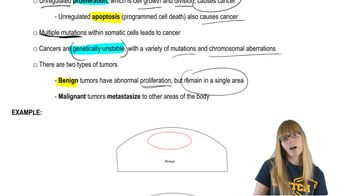
Apoptosis is a programmed cell death process that allows cells to die in a controlled and regulated manner. It is essential for maintaining tissue homeostasis and eliminating damaged or unnecessary cells without causing inflammation.
Recommended video:
Guided course
09:46
Cancer Characteristics

Triggers of Apoptosis

Cells undergo apoptosis in response to various internal and external signals, such as DNA damage, oxidative stress, infection, or developmental cues. These triggers activate signaling pathways that initiate the apoptotic process.
Recommended video:
Guided course
09:46
Cancer Characteristics

Mechanisms of Apoptosis

Apoptosis involves a series of molecular events including activation of caspases, mitochondrial membrane permeabilization, and DNA fragmentation. These mechanisms ensure the cell is dismantled efficiently and safely.
Recommended video: