

Pearson+ LogoPearson+ Logo
Ch. 4 - Modification of Mendelian Ratios
Klug - Essentials of Genetics 10th Edition
Klug10th EditionEssentials of GeneticsISBN: 9780135588789Not the one you use?Change textbook
Chapter 4, Problem 1c

The discussion centers on extensions and modifications of Mendelian principles and ratios. In the process, we encountered many opportunities to consider how this information was acquired. On the basis of these discussions, what answers would you propose to the following fundamental questions?
How do we know that specific genes are located on the sex-determining chromosomes rather than on autosomes?

Verified step by step guidance
1
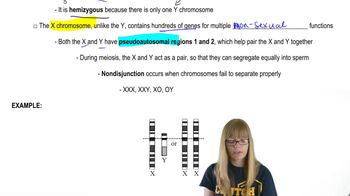
Understand that sex chromosomes (X and Y in many organisms) differ from autosomes in their inheritance patterns, which can be observed through genetic crosses.
Examine the inheritance patterns of traits: if a trait is sex-linked, it will show distinct patterns such as appearing more frequently in one sex or being passed from mother to son, unlike autosomal traits which typically show equal distribution among sexes.
Perform test crosses and analyze offspring phenotypes to see if the trait segregates with sex; for example, a gene on the X chromosome will show different ratios in males and females due to males having only one X chromosome.
Use molecular techniques such as chromosome mapping, linkage analysis, or fluorescent in situ hybridization (FISH) to physically locate genes on specific chromosomes, confirming whether they reside on sex chromosomes or autosomes.
Combine genetic data from inheritance patterns with molecular evidence to confidently determine the chromosomal location of specific genes, distinguishing those on sex chromosomes from those on autosomes.

Verified video answer for a similar problem:

This video solution was recommended by our tutors as helpful for the problem above.
Video duration:
1m
Was this helpful?

Key Concepts

Here are the essential concepts you must grasp in order to answer the question correctly.

Sex-Linked Inheritance

Sex-linked inheritance refers to genes located on sex chromosomes (X or Y) that show distinct patterns of inheritance compared to autosomal genes. Traits linked to these chromosomes often display unique ratios in offspring, such as males being more affected by X-linked recessive disorders, helping to identify gene location.
Recommended video:
Guided course
07:56
Sex-Linked Genes

Genetic Crosses and Phenotypic Ratios

Analyzing offspring phenotypes from controlled genetic crosses reveals inheritance patterns. Deviations from Mendelian autosomal ratios, such as sex-specific expression or reciprocal cross differences, indicate gene linkage to sex chromosomes rather than autosomes.
Recommended video:
Guided course
10:20
Monohybrid Cross

Chromosome Mapping and Cytogenetics

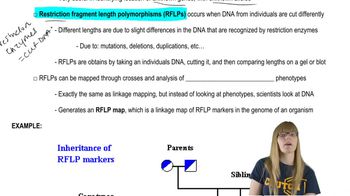
Chromosome mapping techniques, including linkage analysis and cytogenetic methods like fluorescent in situ hybridization (FISH), allow direct localization of genes on chromosomes. These methods confirm whether genes reside on sex chromosomes or autosomes by visualizing gene positions or tracking recombination frequencies.
Recommended video:
Guided course
07:11
Mapping with Markers