
Pearson+ LogoPearson+ Logo
Ch.16 Amino Acids, Proteins, and Enzymes
Timberlake - Chemistry: An Introduction to General, Organic, and Biological Chemistry 14th Edition
Timberlake14thChemistry: An Introduction to General, Organic, and Biological ChemistryISBN: 9781292472249Not the one you use?Change textbook
Chapter 16, Problem 56a

Adults who are lactose intolerant cannot break down the disaccharide in milk products. To help digest dairy food, a product known as Lactaid can be given prior to consuming dairy products. (16.4, 16.5)
a. What is the name of enzyme present in Lactaid, and what is the major class of this enzyme?

Verified step by step guidance
1
Step 1: Understand the context of the problem. Lactose intolerance occurs because the body lacks the enzyme needed to break down lactose, a disaccharide found in milk products. Lactaid is a product designed to help with this issue.
Step 2: Identify the enzyme present in Lactaid. The enzyme is called lactase, which is responsible for breaking down lactose into its monosaccharide components: glucose and galactose.
Step 3: Determine the major class of the enzyme lactase. Enzymes are categorized based on the type of reaction they catalyze. Lactase belongs to the class of hydrolases, which catalyze the hydrolysis of chemical bonds.
Step 4: Relate the function of lactase to its classification. Lactase specifically catalyzes the hydrolysis of the glycosidic bond in lactose, splitting it into glucose and galactose, which can be absorbed by the body.
Step 5: Summarize the answer. The enzyme present in Lactaid is lactase, and it belongs to the major class of hydrolases, which are enzymes that catalyze hydrolysis reactions.

Verified video answer for a similar problem:

This video solution was recommended by our tutors as helpful for the problem above.
Video duration:
3m
Was this helpful?

Key Concepts

Here are the essential concepts you must grasp in order to answer the question correctly.

Lactase

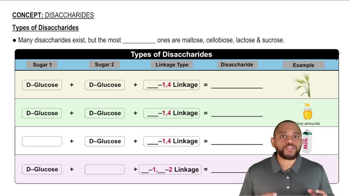
Lactase is the enzyme present in Lactaid that breaks down lactose, the disaccharide found in milk. It catalyzes the hydrolysis of lactose into its constituent monosaccharides, glucose and galactose, which can be easily absorbed by the body. Individuals who are lactose intolerant have insufficient levels of lactase, leading to digestive discomfort when consuming dairy products.
Recommended video:
Guided course
2:31
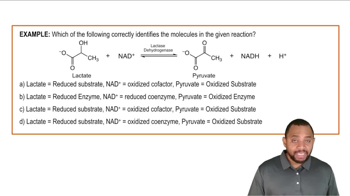
Nicotinamide Adenine Dinucleotide Example 2

Enzyme Classification

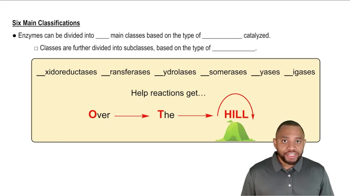
Enzymes are classified into several major classes based on the type of reaction they catalyze. Lactase belongs to the class of enzymes known as hydrolases, which facilitate the breakdown of compounds by adding water. This classification is essential for understanding how enzymes function in biochemical processes and their role in digestion.
Recommended video:
Guided course
1:26
Six Main Classifications Concept 3

Lactose Intolerance

Lactose intolerance is a common condition where individuals lack sufficient lactase enzyme to digest lactose effectively. This leads to symptoms such as bloating, gas, and diarrhea after consuming dairy products. Understanding lactose intolerance is crucial for recognizing the importance of lactase supplements like Lactaid in aiding digestion for affected individuals.
Recommended video:
Guided course
3:39
Types of Disaccharides Concept 1
Related Practice
Textbook Question

In humans, the antibiotic amoxicillin (a type of penicillin) is used to treat certain bacterial infections.

c. Is amoxicillin a reversible or irreversible inhibitor?

813
views
Textbook Question

Ethylene glycol (HO—CH2—CH2—OH) is a major component of antifreeze. If ingested, it is first converted to HOOC—CHO (oxoethanoic acid) and then to HOOC—COOH (oxalic acid), which is toxic.

<IMAGE>

a. What class of enzyme catalyzes the reactions described?

1125
views
Textbook Question

Ethylene glycol (HO—CH2—CH2—OH) is a major component of antifreeze. If ingested, it is first converted to HOOC—CHO (oxoethanoic acid) and then to HOOC—COOH (oxalic acid), which is toxic.

<IMAGE>

b. The treatment for the ingestion of ethylene glycol is an intravenous solution of ethanol. How might this help prevent toxic levels of oxalic acid in the body?

730
views
Textbook Question

Adults who are lactose intolerant cannot break down the disaccharide in milk products. To help digest dairy food, a product known as Lactaid can be given prior to consuming dairy products. (16.4, 16.5)

b. What might happen to the enzyme if the Lactaid were stored at 55 °C?

34
views
Textbook Question

Fresh pineapple contains the enzyme bromelain that hydrolyzes peptide bonds in proteins.

<IMAGE>

a. The directions for a gelatin (protein) dessert say not to add fresh pineapple. However, canned pineapple where pineapple is heated to high temperatures can be added. Why?

1052
views
Textbook Question

Fresh pineapple contains the enzyme bromelain that hydrolyzes peptide bonds in proteins.

<IMAGE>

b. Fresh pineapple is used in a marinade to tenderize tough meat. Why?

888
views