Ch.5 Chemical Reactions
Frost - General, Organic and Biological Chemistry 4th Edition
Frost4th EditionGeneral, Organic and Biological ChemistryISBN: 9780134988696Not the one you use?Change textbook
Chapter 2, Problem 72c

Fill in the missing organic products for the complete hydrogenation of the following:
(c)

Verified step by step guidance
1
Identify the type of organic compound in the given image. For complete hydrogenation, the compound is likely an alkene or alkyne, as these undergo hydrogenation reactions to form saturated hydrocarbons.
Understand the process of complete hydrogenation. In this reaction, hydrogen (H₂) is added across the double or triple bonds of the compound in the presence of a catalyst, such as platinum (Pt), palladium (Pd), or nickel (Ni).
Determine the structure of the product. For alkenes, the double bond is converted into a single bond, and two hydrogen atoms are added to the carbon atoms that were part of the double bond. For alkynes, the triple bond is fully reduced to a single bond, with four hydrogen atoms added in total.
Write the balanced chemical equation for the reaction. Represent the reactant (the given compound), the hydrogen gas (H₂), and the catalyst, and show the resulting saturated hydrocarbon product.
Verify the product's structure. Ensure that all double or triple bonds in the original compound have been fully reduced and that the resulting product is a saturated hydrocarbon (alkane).

Verified video answer for a similar problem:

This video solution was recommended by our tutors as helpful for the problem above.
Video duration:
1m
Was this helpful?

Key Concepts

Here are the essential concepts you must grasp in order to answer the question correctly.

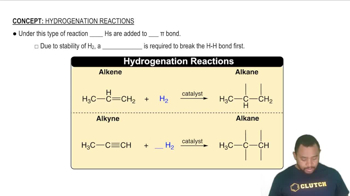
Hydrogenation

Hydrogenation is a chemical reaction that involves the addition of hydrogen (H2) to unsaturated organic compounds, typically alkenes or alkynes, converting them into saturated hydrocarbons. This process is commonly used in the food industry to convert liquid vegetable oils into solid fats, as well as in the production of various chemicals. Understanding the mechanism of hydrogenation, including the role of catalysts, is essential for predicting the products formed.
Recommended video:
Guided course
1:22
Hydrogenation Reactions Concept 1

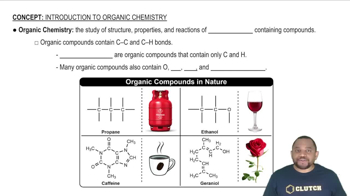
Saturation of Organic Compounds

Saturation refers to the presence of single bonds between carbon atoms in organic compounds, as opposed to double or triple bonds found in unsaturated compounds. When an unsaturated compound undergoes hydrogenation, it becomes saturated, meaning it can hold more hydrogen atoms. Recognizing the difference between saturated and unsaturated compounds is crucial for determining the final products of hydrogenation reactions.
Recommended video:
Guided course
2:26
Introduction to Organic Chemistry Concept 1

Reaction Mechanism

A reaction mechanism describes the step-by-step sequence of elementary reactions by which overall chemical change occurs. In the case of hydrogenation, understanding the mechanism helps in predicting the formation of specific products and the conditions required for the reaction. This includes the role of catalysts, the nature of the reactants, and the reaction environment, which all influence the efficiency and outcome of the hydrogenation process.
Recommended video:
Guided course
1:30
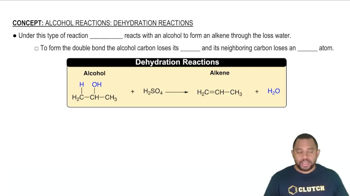
Alcohol Reactions: Dehydration Reactions Concept 1