Pearson+ LogoPearson+ Logo
Ch.8 Solution Chemistry Sugar and Water Do Mix
Frost - General, Organic and Biological Chemistry 4th Edition
Frost4th EditionGeneral, Organic and Biological ChemistryISBN: 9780134988696Not the one you use?Change textbook
Chapter 5, Problem 101c

Do the following processes require energy when transporting molecules across the cell membrane?
(c) active transport

Verified step by step guidance
1
Understand the concept of active transport: Active transport is a process where molecules are moved across the cell membrane against their concentration gradient (from a region of lower concentration to a region of higher concentration). This movement is not spontaneous and requires energy input.
Identify the energy source: Active transport typically requires energy in the form of adenosine triphosphate (ATP). ATP provides the necessary energy to drive the transport proteins that facilitate this movement.
Recognize the role of transport proteins: Active transport involves specific proteins, such as pumps (e.g., the sodium-potassium pump), which use the energy from ATP to change their shape and move molecules across the membrane.
Compare with passive transport: Unlike passive transport (e.g., diffusion or facilitated diffusion), which does not require energy and moves molecules along their concentration gradient, active transport requires energy because it works against the natural gradient.
Conclude that energy is required: Based on the definition and mechanism of active transport, it is clear that this process requires energy to move molecules across the cell membrane against their concentration gradient.

Verified video answer for a similar problem:

This video solution was recommended by our tutors as helpful for the problem above.
Video duration:
1m
Was this helpful?

Key Concepts

Here are the essential concepts you must grasp in order to answer the question correctly.

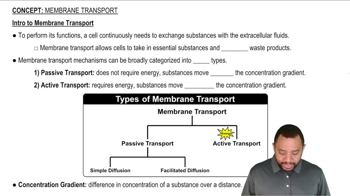
Active Transport

Active transport is a cellular process that moves molecules across the cell membrane against their concentration gradient, requiring energy input. This energy is typically derived from ATP, allowing cells to maintain concentration differences essential for various functions, such as nutrient uptake and waste removal.
Recommended video:
Guided course
1:21
Membrane Transport Concept 1

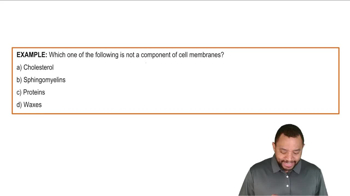
Cell Membrane Structure

The cell membrane, composed of a phospholipid bilayer with embedded proteins, serves as a selective barrier that regulates the movement of substances in and out of the cell. Understanding its structure is crucial for grasping how different transport mechanisms, including active transport, function.
Recommended video:
Guided course
1:00
Cell Membranes Example 1

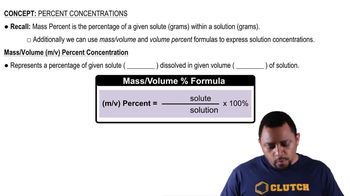
Concentration Gradient

A concentration gradient refers to the difference in the concentration of a substance across a space or membrane. In the context of active transport, molecules are moved from areas of lower concentration to areas of higher concentration, which is energetically unfavorable and necessitates the use of energy.
Recommended video:
Guided course
00:52
Percent Concentrations Concept 1