What type of change, physical or chemical, takes place in each of the following?c. A tree is cut into boards at a saw mill.
Verified step by step guidance
1
Identify the initial and final states of the material involved in the process. In this case, the tree is initially in the form of a whole tree and is then cut into boards.
Consider whether the process involves a change in the chemical composition of the material. Cutting a tree into boards does not alter the chemical structure of the wood; it remains cellulose and other organic compounds.
Determine if the process is reversible or irreversible. While cutting is typically irreversible in practical terms, the key factor is whether the material's chemical identity changes.
Evaluate if the process involves a change in physical form or state without altering the chemical identity. Cutting changes the shape and size of the wood but not its chemical composition.
Conclude that since the chemical composition of the wood remains unchanged and only its physical form is altered, the process is a physical change.
Verified video answer for a similar problem:
This video solution was recommended by our tutors as helpful for the problem above
Video duration:
2m
Play a video:
0 Comments
Key Concepts
Here are the essential concepts you must grasp in order to answer the question correctly.
Physical Change
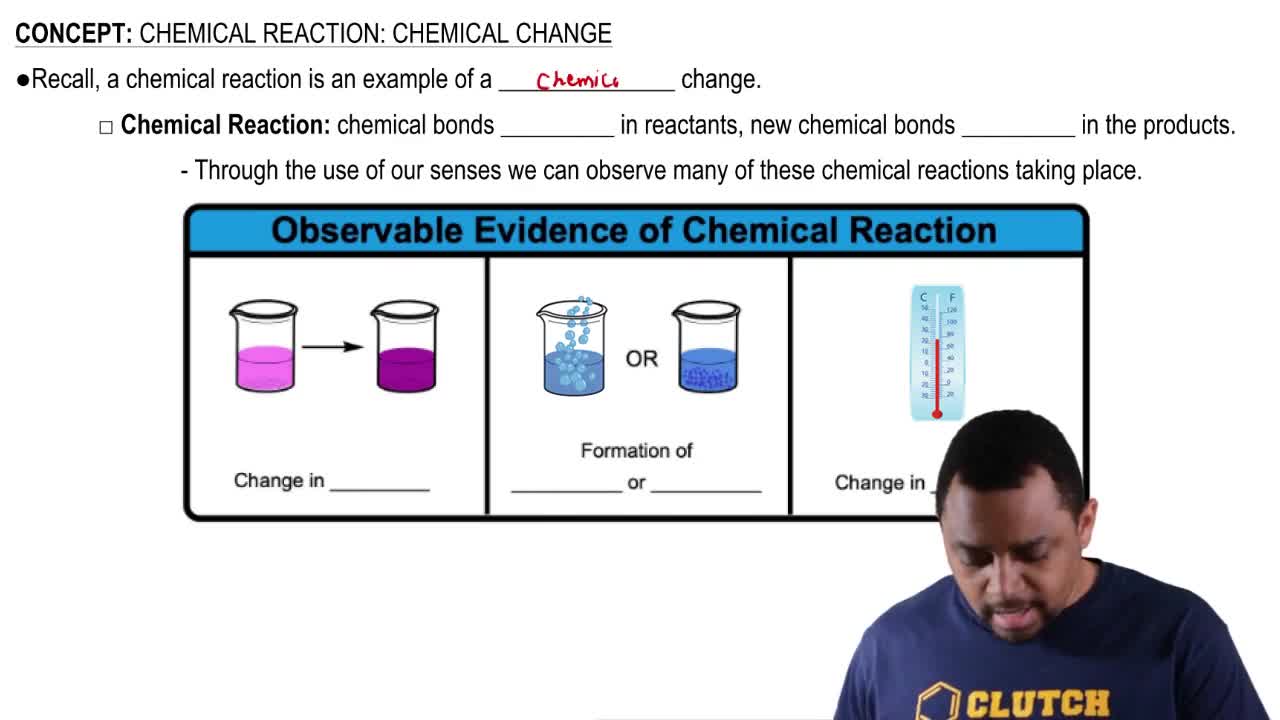
A physical change involves a transformation that does not alter the chemical composition of a substance. Examples include changes in state, shape, or size, such as melting, freezing, or cutting. In the context of the question, cutting a tree into boards is a physical change because the wood's chemical structure remains unchanged.
A chemical change results in the formation of one or more new substances with different chemical properties. This type of change involves breaking and forming chemical bonds, as seen in processes like combustion or rusting. Unlike physical changes, chemical changes are often irreversible under normal conditions.
Understanding the distinction between physical and chemical changes is crucial in chemistry. Physical changes can often be reversed, while chemical changes typically cannot. This distinction helps in identifying processes in everyday life and in laboratory settings, allowing for better predictions of material behavior.

 2:26 minutes
 Verified step by step guidance
 01:41
01:41