Skip to main content
Introduction to Chemistry
My Course
Learn
Exam Prep
AI Tutor
Study Guides
Flashcards
Explore
Try the app
My Course
Learn
Exam Prep
AI Tutor
Study Guides
Flashcards
Explore
Try the app
Back
Periodic Table: Group Names definitions
You can tap to flip the card.
Period
You can tap to flip the card.
👆
Period
A horizontal row on the periodic table, currently totaling seven, which may increase as new elements are discovered or synthesized.
Track progress
Control buttons has been changed to "navigation" mode.
1/14
Related flashcards
Related practice
Recommended videos
Periodic Table: Group Names quiz #1
Periodic Table: Group Names
40 Terms
Periodic Table: Group Names quiz #2
Periodic Table: Group Names
27 Terms
Periodic Table: Group Names
4. Atoms and Elements
5 problems
Topic
Periodic Table: Representative Elements & Transition Metals
4. Atoms and Elements
5 problems
Topic
4. Atoms and Elements - Part 1 of 2
12 topics
35 problems
Chapter
4. Atoms and Elements - Part 2 of 2
1 topic
3 problems
Chapter
Guided course
05:33
Periodic Table: Group Names
11840
views
95
rank
Guided course
01:17
Periodic Table: Group Names Example 1
8960
views
64
rank
Terms in this set (14)
Hide definitions
Period
A horizontal row on the periodic table, currently totaling seven, which may increase as new elements are discovered or synthesized.
Group
A vertical column on the periodic table, also called a family or series, containing elements with similar chemical properties.
Family
A set of elements in the same vertical column, sharing similar chemical behaviors due to their electron arrangements.
Series
Another term for a vertical column on the periodic table, emphasizing the sequence of elements with related properties.
Alkali Metals
Elements in group 1, from lithium to francium, known for high reactivity and similar chemical characteristics.
Alkaline Earth Metals
Elements in group 2, from beryllium to radium, recognized for their reactivity and distinct group properties.
Nyctogens
Elements in group 15, including nitrogen and its group members, sharing related chemical traits.
Chalcogens
Elements in group 16, such as oxygen and its group, noted for their common chemical features.
Halogens
Elements in group 17, like fluorine and its group, characterized by high reactivity and similar behaviors.
Noble Gases
Elements in group 18, once called inert gases, known for their stability and low reactivity, though some can form compounds.
Inert Gases
A traditional name for group 18 elements, reflecting their perceived lack of reactivity, now known to have exceptions.
Lanthanides
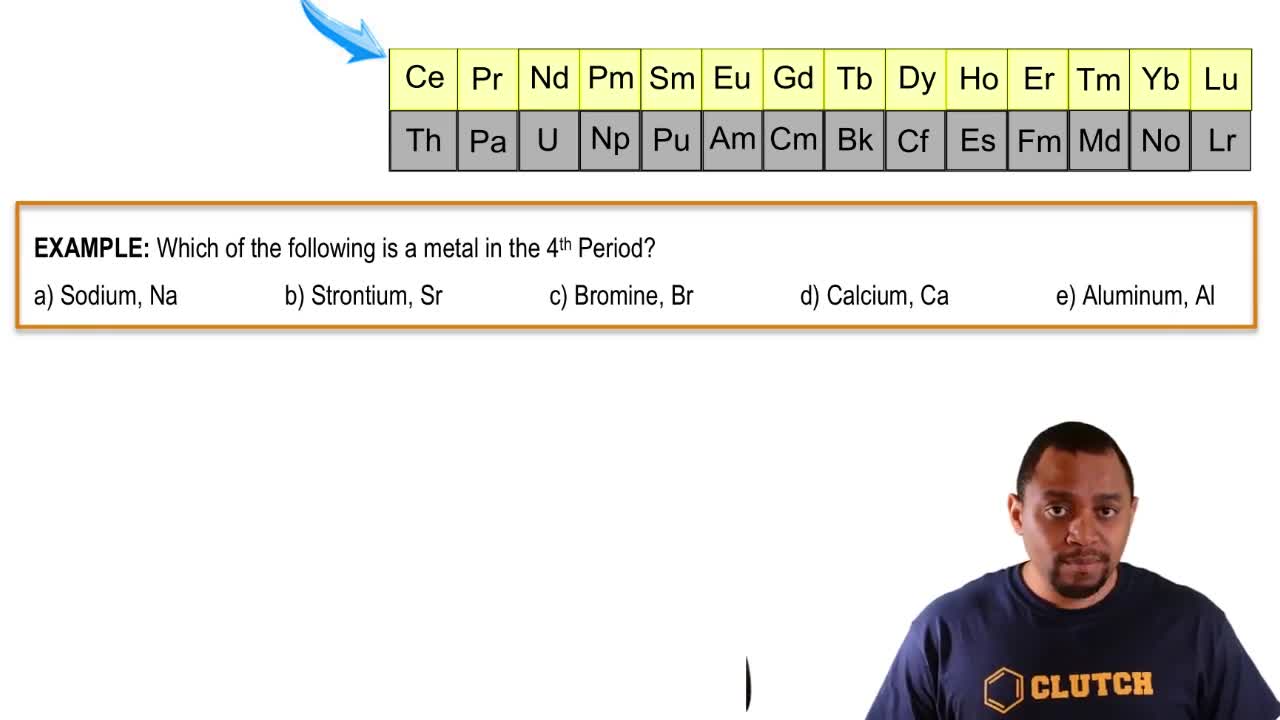
A series of elements placed below the main table, following lanthanum, often shown in a separate row for clarity.
Actinides
A series of elements located below the main table, following actinium, displayed separately for presentation purposes.
Electron Arrangement
The specific distribution of electrons in an atom, influencing chemical properties and group similarities.
 BackBack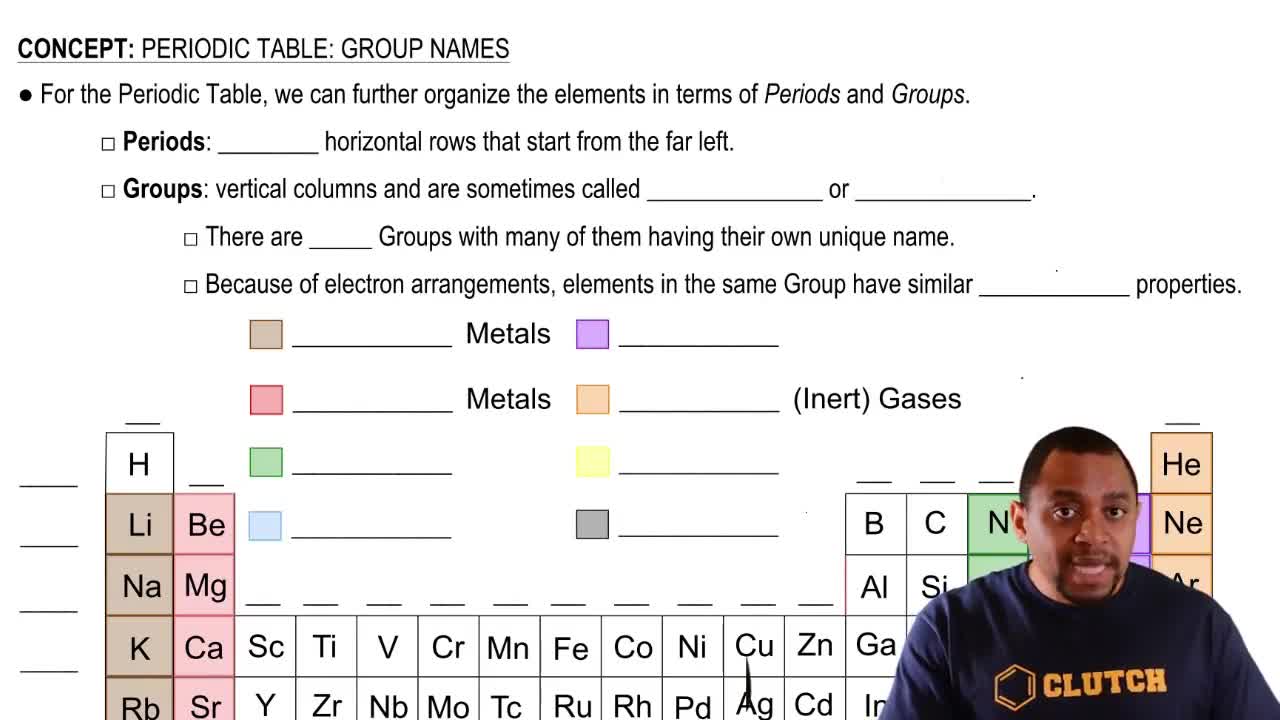
 05:33
05:33