Ch. 25 - Pathogenic RNA Viruses
Bauman - Microbiology with Diseases by Taxonomy 6th Edition
Bauman6th EditionMicrobiology with Diseases by TaxonomyISBN: 9780134832302Not the one you use?Change textbook
Chapter 25, Problem 8

Polio and smallpox have been eliminated as natural threats to human health in the United States. (Some risk from bioterrorism remains.) You have considered the features of these diseases that allowed them to be eliminated. From your studies of other viruses, what other viral diseases are candidates for elimination? Why hasn’t AIDS been eliminated?

Verified step by step guidance
1
Identify the key features that allowed polio and smallpox to be eliminated, such as having no non-human reservoirs, effective vaccines, and clear symptoms that facilitate diagnosis and containment.
Apply these criteria to other viral diseases to determine which are candidates for elimination. For example, diseases with effective vaccines, no animal reservoirs, and clear transmission pathways are good candidates.
Consider diseases like measles or rubella, which have effective vaccines and no animal reservoirs, making them potential candidates for elimination.
Analyze why AIDS (caused by HIV) has not been eliminated by examining factors such as the lack of an effective vaccine, the presence of a long asymptomatic period, and the virus's ability to integrate into host DNA, making it difficult to eradicate.
Summarize that elimination depends on biological, epidemiological, and social factors, including vaccine availability, transmission dynamics, and public health infrastructure.

Verified video answer for a similar problem:

This video solution was recommended by our tutors as helpful for the problem above.
Video duration:
1m
Was this helpful?

Key Concepts

Here are the essential concepts you must grasp in order to answer the question correctly.

Criteria for Viral Disease Elimination

Elimination of viral diseases requires factors like an effective vaccine, no animal reservoirs, clear symptoms for diagnosis, and limited modes of transmission. Diseases like smallpox and polio met these criteria, enabling targeted vaccination and surveillance to interrupt transmission.
Recommended video:
Guided course
03:29
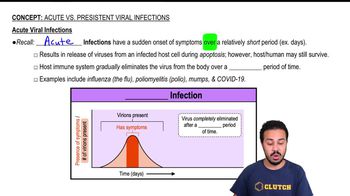
Acute Viral Infections

Challenges in Eliminating HIV/AIDS

HIV/AIDS remains uneliminated due to the absence of a fully effective vaccine, its long asymptomatic period, high mutation rate, and multiple transmission routes. Additionally, HIV integrates into host DNA, making eradication from infected individuals difficult.
Recommended video:
Guided course
03:26
Microbiome Makes Nutrients & Aids in Host Digestion

Potential Candidates for Viral Disease Elimination

Other viral diseases suitable for elimination include measles and rubella, which have effective vaccines and no animal reservoirs. Their transmission can be interrupted through widespread immunization and surveillance, similar to polio and smallpox.
Recommended video:
Guided course
03:29
Acute Viral Infections