What happens to the carbon atoms in sugar catabolized by Escherichia coli?
Verified step by step guidance
1
Understand that Escherichia coli catabolizes sugar primarily through glycolysis, where glucose (a six-carbon sugar) is broken down into two molecules of pyruvate, each containing three carbon atoms.
Recognize that during glycolysis, the carbon atoms in glucose are rearranged and partially oxidized, releasing energy stored in chemical bonds.
Know that pyruvate can then enter further metabolic pathways such as the tricarboxylic acid (TCA) cycle (also called the Krebs cycle), where the carbon atoms are further oxidized to carbon dioxide (CO2).
Realize that the carbon atoms from sugar are ultimately released as CO2 during respiration, or they may be incorporated into other cellular components if the bacteria are growing and synthesizing biomass.
Summarize that the fate of carbon atoms in sugar catabolized by E. coli involves their conversion from glucose to pyruvate, then to CO2 through respiration, or incorporation into cellular molecules during biosynthesis.
Verified video answer for a similar problem:
This video solution was recommended by our tutors as helpful for the problem above
Video duration:
5m
Play a video:
0 Comments
Key Concepts
Here are the essential concepts you must grasp in order to answer the question correctly.
Sugar Catabolism in Escherichia coli
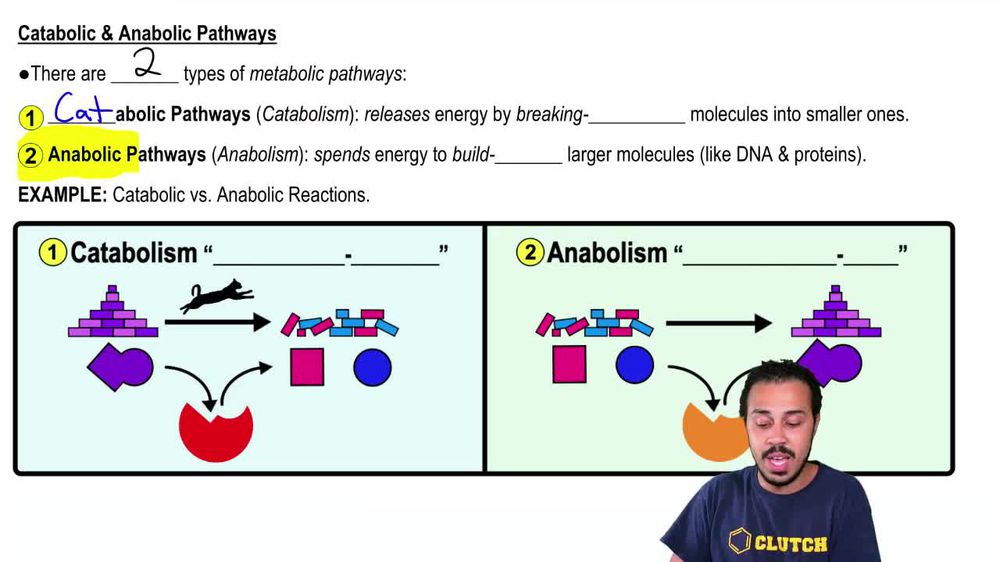
Escherichia coli breaks down sugars like glucose through metabolic pathways such as glycolysis and the pentose phosphate pathway. These processes convert sugars into smaller molecules, releasing energy and producing intermediates for further metabolism.
During sugar catabolism, carbon atoms from sugars are rearranged and oxidized, eventually forming key intermediates like pyruvate. These carbons can be further processed in the tricarboxylic acid (TCA) cycle or used for biosynthesis, depending on cellular conditions.
The carbon atoms from sugar are either fully oxidized to carbon dioxide, incorporated into biomass, or converted into fermentation products. The specific fate depends on oxygen availability and metabolic state, influencing energy yield and growth.