Ch. 13 - Immune System Disorders
Norman-McKay- Microbiology: Basic and Clinical Principles 2nd Edition
Norman-McKay2nd EditionMicrobiology: Basic and Clinical PrinciplesISBN: 9780137661619Not the one you use?Change textbook
Chapter 13, Problem 15

Which of the following is (are) true regarding primary immunodeficiencies? Select all that apply.
a. These disorders tend to be present from birth.
b. These disorders are also called congenital immunodeficiencies.
c. These disorders are more common in elderly patients.
d. Patients with these disorders may not have a familial history of immunodeficiencies.
e. Patients with these disorders tend to experience recurring, persistent, and severe infections, often caused by uncommon agents.

Verified step by step guidance
1
Step 1: Understand the definition of primary immunodeficiencies (PIDs). These are genetic or congenital disorders that affect the immune system's ability to function properly, typically present from birth.
Step 2: Analyze option (a): Since PIDs are genetic or congenital, they tend to be present from birth. This aligns with the definition of primary immunodeficiencies.
Step 3: Analyze option (b): Because PIDs are present from birth, they are also called congenital immunodeficiencies, making this statement true.
Step 4: Analyze option (c): PIDs are not more common in elderly patients; rather, secondary immunodeficiencies (due to aging, infections, or other causes) are more common in that group. So this statement is false.
Step 5: Analyze options (d) and (e): Patients with PIDs may or may not have a familial history due to variable inheritance patterns, so (d) can be true. Also, these patients often experience recurring, persistent, and severe infections, often caused by uncommon pathogens, making (e) true.

Verified video answer for a similar problem:

This video solution was recommended by our tutors as helpful for the problem above.
Video duration:
2m
Was this helpful?

Key Concepts

Here are the essential concepts you must grasp in order to answer the question correctly.

Primary Immunodeficiencies

Primary immunodeficiencies are genetic disorders that impair the immune system's ability to fight infections. They are usually present from birth and result from inherited or spontaneous mutations affecting immune cells or molecules.
Recommended video:
Guided course
06:59
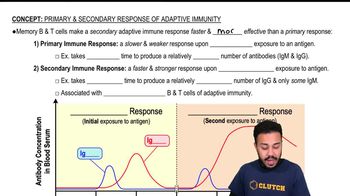
Primary and Secondary Response of Adaptive Immunity

Clinical Presentation and Epidemiology

Patients with primary immunodeficiencies often experience recurrent, persistent, or severe infections, sometimes caused by unusual pathogens. These disorders are typically diagnosed in childhood but can vary in severity and may lack a clear family history.
Recommended video:
Guided course
04:11
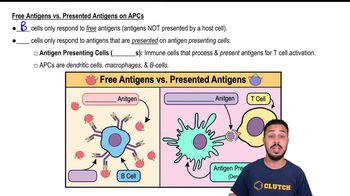
Free Antigens vs. Presented Antigens on APCs

Terminology: Congenital vs. Acquired Immunodeficiencies

Primary immunodeficiencies are also known as congenital immunodeficiencies because they are present at birth due to genetic causes. In contrast, secondary or acquired immunodeficiencies develop later in life due to external factors like infections or aging.
Recommended video:
Guided course
04:16
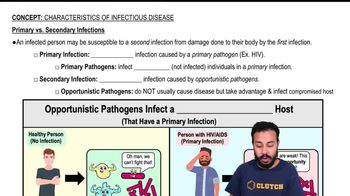
Primary vs. Secondary Infections