A child comes into your clinic with impetigo. The lab cultures a sample for further analysis. If the sample is S. aureus, which lab results would you expect? a. Gram-positive cocci in clusters, catalase and coagulase positive b. Gram-negative diplococci, catalase positive, and coagulase negative c. Gram-positive cocci in clusters, catalase negative, and coagulase positive d. Gram-positive cocci in chains, catalase positive, and coagulase negative e. Gram-positive cocci in chains, catalase negative, and coagulase positive
Verified step by step guidance
1
Step 1: Identify the morphology of Staphylococcus aureus under the microscope. S. aureus is known to be Gram-positive cocci that typically appear in clusters, resembling grape-like bunches.
Step 2: Determine the catalase test result. Staphylococcus species, including S. aureus, produce the enzyme catalase, so the catalase test will be positive.
Step 3: Determine the coagulase test result. S. aureus is coagulase positive, which helps differentiate it from other Staphylococcus species like S. epidermidis, which are coagulase negative.
Step 4: Compare the lab results given in the options with the known characteristics of S. aureus: Gram-positive cocci in clusters, catalase positive, and coagulase positive.
Step 5: Select the option that matches these characteristics exactly, which will confirm the expected lab results for S. aureus isolated from an impetigo lesion.
Verified video answer for a similar problem:
This video solution was recommended by our tutors as helpful for the problem above
Video duration:
3m
Play a video:
0 Comments
Key Concepts
Here are the essential concepts you must grasp in order to answer the question correctly.
Gram Staining and Morphology of Staphylococcus aureus
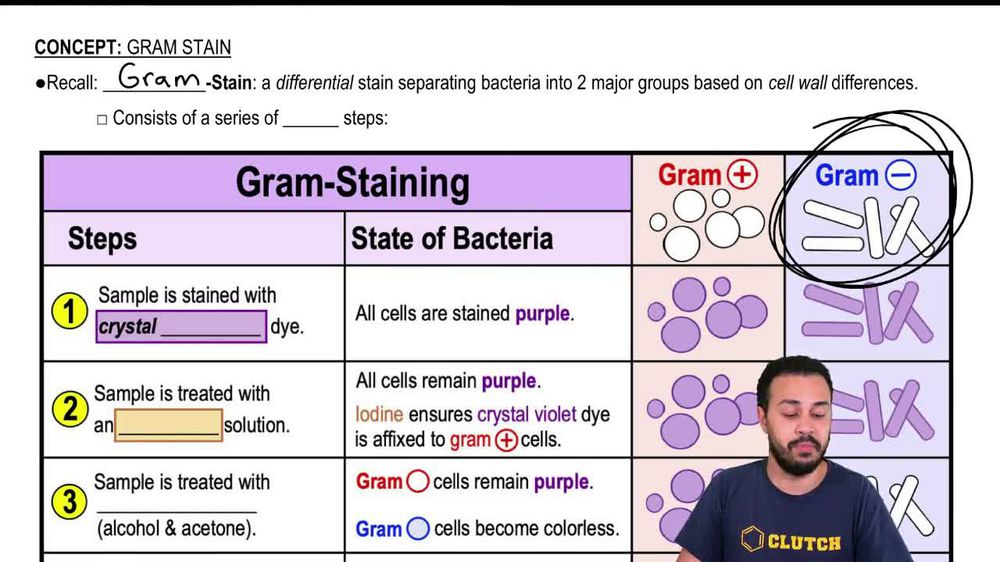
Staphylococcus aureus is a Gram-positive bacterium that appears as cocci arranged in clusters under the microscope. Gram staining differentiates bacteria by their cell wall structure, with S. aureus retaining the crystal violet stain, appearing purple. Recognizing its cluster formation helps distinguish it from streptococci, which form chains.
The catalase test detects the enzyme catalase, which breaks down hydrogen peroxide into water and oxygen. Staphylococci, including S. aureus, are catalase positive, producing bubbles when exposed to hydrogen peroxide. This test differentiates staphylococci (catalase positive) from streptococci (catalase negative).
The coagulase test identifies the ability of bacteria to clot plasma by producing the enzyme coagulase. Staphylococcus aureus is coagulase positive, which helps distinguish it from other staphylococci species like S. epidermidis that are coagulase negative. This test is crucial for confirming the presence of S. aureus in clinical samples.