
Starch is readily metabolized by many cells, but a starch molecule is too large to cross the plasma membrane. How does a cell obtain the glucose molecules from a starch polymer? How does the cell transport these glucose molecules across the plasma membrane?

Tortora 14th Edition
Ch. 4 - Functional Anatomy of Prokaryotic and Eukaryotic Cells
Problem 9You have isolated a motile, gram-positive cell with no visible nucleus. You can assume this cell has
a. Ribosomes.
b. Mitochondria.
c. An endoplasmic reticulum.
d. A Golgi complex.
e. All of the above
Verified step by step guidance
Verified video answer for a similar problem:
Key Concepts
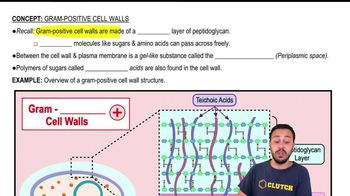
Gram-Positive Bacterial Cell Structure
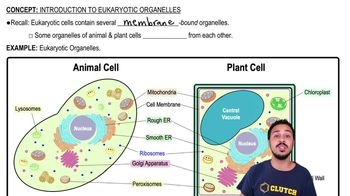
Prokaryotic vs. Eukaryotic Organelles
Ribosomes in Prokaryotes
Use the following choices to answer questions 3–5:
a. Bacillus coagulans
b. Byssochlamys
c. flat sour spoilage
d. Lactobacillus
e. thermophilic anaerobic spoilage
A heat-resistant fungus that causes spoilage in acidic foods.
The antibiotic amphotericin B disrupts plasma membranes by combining with sterols; it will affect all of the following cells except
a. Animal cells.
b. Gram-negative bacterial cells.
c. Fungal cells.
d. Mycoplasma cells.
e. Plant cells.
Match the characteristics of eukaryotic cells in column A with their functions in column B.
Which of the following pairs is mismatched?
a. Metachromatic granules—stored phosphates
b. Polysaccharide granules—stored starch
c. Lipid inclusions—poly-β-hydroxybutyric acid
d. Sulfur granules—energy reserve
e. Ribosomes—protein storage
What group of microbes is characterized by cells that form filaments, reproduce by spores, and have peptidoglycan in their cell walls?