Compare and contrast diploid cell culture and continuous cell culture.
Verified step by step guidance
1
Step 1: Define diploid cell culture and continuous cell culture. Diploid cell cultures are derived from normal cells that have a finite lifespan and maintain a diploid chromosome number, meaning they have two sets of chromosomes. Continuous cell cultures, on the other hand, are derived from transformed or cancerous cells that can proliferate indefinitely and often have an abnormal chromosome number (aneuploidy).
Step 2: Compare the lifespan and growth characteristics. Diploid cell cultures have a limited number of cell divisions before senescence (they stop dividing), while continuous cell cultures can divide indefinitely due to their transformed nature.
Step 3: Discuss the applications and uses. Diploid cell cultures are often used for vaccine production and studies requiring normal cell physiology, whereas continuous cell cultures are used for research requiring large quantities of cells, such as cancer research or production of recombinant proteins.
Step 4: Contrast the genetic stability. Diploid cell cultures maintain genetic stability and normal chromosome number, while continuous cell cultures often show genetic instability and chromosomal abnormalities.
Step 5: Summarize the differences in morphology and behavior. Diploid cells tend to grow in a monolayer and exhibit contact inhibition (stop growing when they touch each other), whereas continuous cells may grow in multiple layers and often lose contact inhibition, leading to uncontrolled growth.
Verified video answer for a similar problem:
This video solution was recommended by our tutors as helpful for the problem above
Video duration:
2m
Play a video:
0 Comments
Key Concepts
Here are the essential concepts you must grasp in order to answer the question correctly.
Diploid Cell Culture
Diploid cell cultures are derived from normal animal cells that have a finite lifespan and maintain a diploid chromosome number. They are used for virus cultivation and vaccine production because they closely mimic natural host cells. These cultures grow in monolayers and have limited passages before senescence.
Continuous cell cultures originate from transformed or cancerous cells that can divide indefinitely, often having aneuploid chromosome numbers. They are easier to maintain and provide a constant supply of cells for research and industrial applications. These cultures can grow in suspension or monolayers and are less representative of normal physiology.
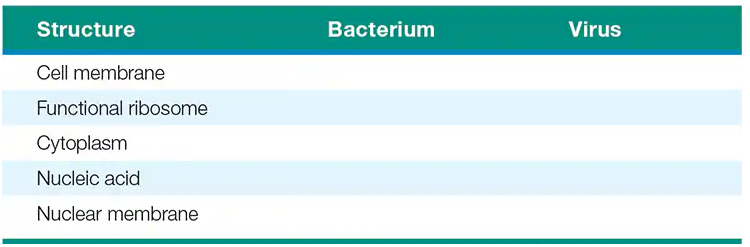
Comparison of Cellular Structures in Bacteria and Viruses
Understanding the structural differences between bacteria and viruses is essential for cell culture techniques. Bacteria have cell membranes, functional ribosomes, cytoplasm, and nucleic acids but lack a nuclear membrane. Viruses lack most cellular structures, relying on host cells for replication, which influences the choice of cell culture type for viral propagation.