The final electron acceptor in aerobic respiration is ________.
Verified step by step guidance
1
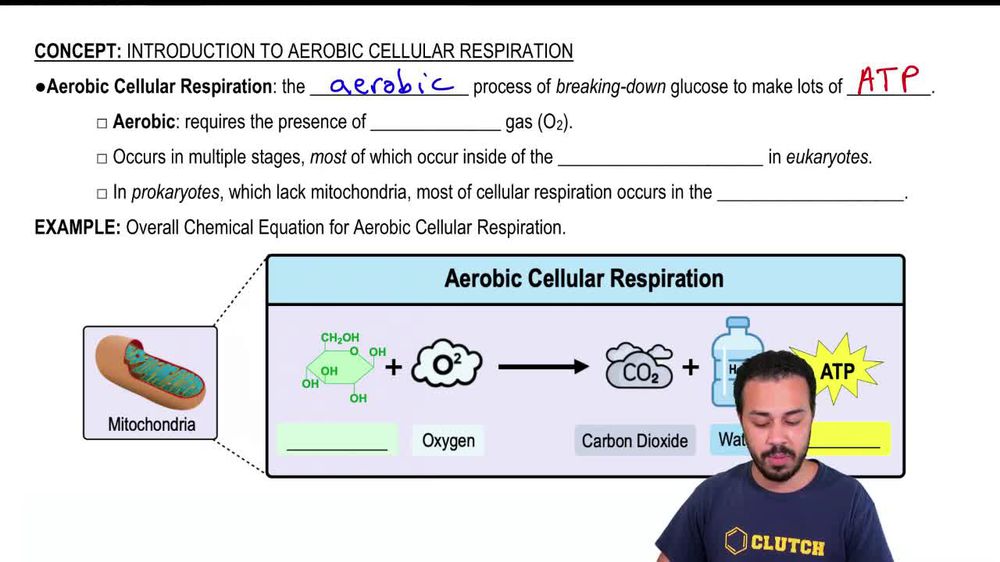
Understand the context of aerobic respiration, which is a metabolic process where cells convert glucose and oxygen into energy (ATP), carbon dioxide, and water.
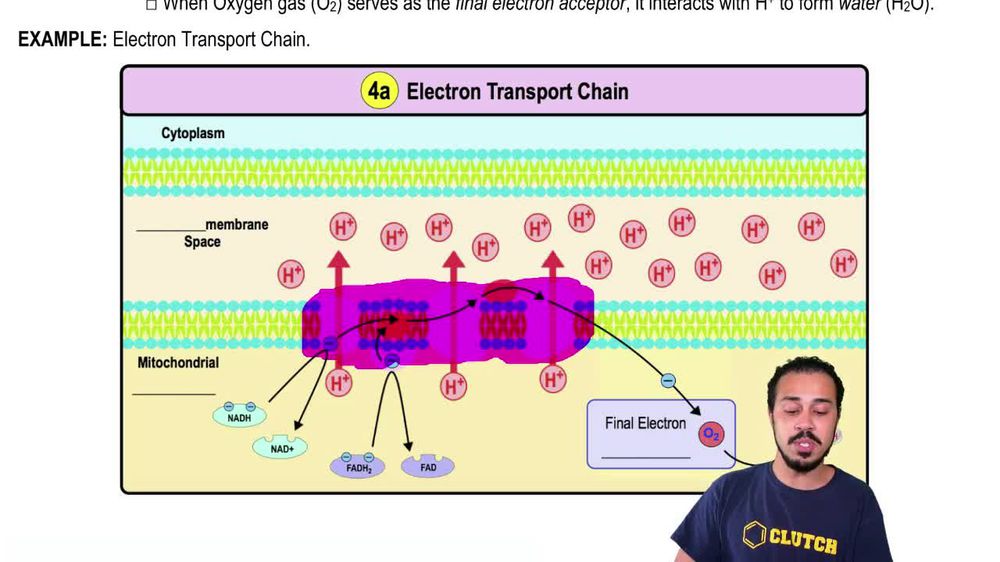
Recall that during aerobic respiration, electrons are transferred through a series of protein complexes in the electron transport chain located in the mitochondrial membrane.
Identify that the final electron acceptor is the molecule that receives electrons at the end of the electron transport chain, allowing the chain to continue functioning.
Remember that in aerobic respiration, oxygen acts as the final electron acceptor because it has a high affinity for electrons and combines with protons to form water.
Therefore, the final electron acceptor in aerobic respiration is oxygen (O\_2).
Verified video answer for a similar problem:
This video solution was recommended by our tutors as helpful for the problem above
Video duration:
2m
Play a video:
0 Comments
Key Concepts
Here are the essential concepts you must grasp in order to answer the question correctly.
Aerobic Respiration
Aerobic respiration is a metabolic process in which cells convert glucose and oxygen into energy (ATP), carbon dioxide, and water. It requires oxygen as the final electron acceptor to efficiently produce energy through the electron transport chain.
The electron transport chain is a series of protein complexes located in the cell membrane (or mitochondrial membrane in eukaryotes) that transfer electrons from electron donors to acceptors via redox reactions. This transfer creates a proton gradient used to generate ATP.
The final electron acceptor is the molecule that receives electrons at the end of the electron transport chain. In aerobic respiration, oxygen acts as the final electron acceptor, combining with electrons and protons to form water, enabling continuous electron flow and ATP production.