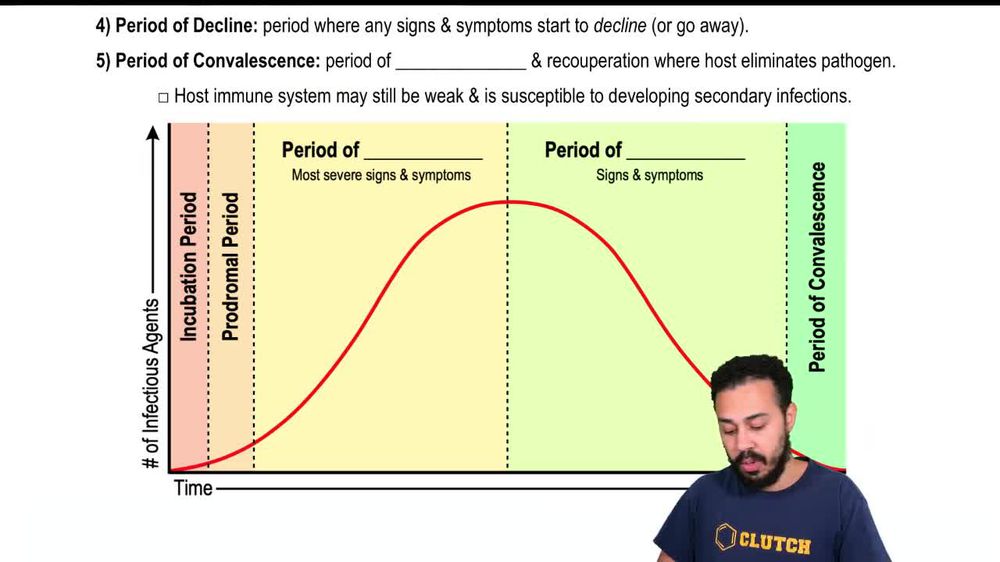
Put the following in the correct order to describe the pattern of disease: period of convalescence, prodromal period, period of decline, incubation period, period of illness.
Verified step by step guidance
1
Understand that the pattern of disease progression follows a sequence of stages starting from exposure to recovery.
Identify the first stage as the incubation period, which is the time between exposure to the pathogen and the appearance of the first symptoms.
Next is the prodromal period, characterized by the onset of mild or nonspecific symptoms indicating the beginning of illness.
Then comes the period of illness, where the disease is at its peak with the most severe symptoms.
Following this is the period of decline, during which symptoms start to subside and the patient begins to recover.
Finally, the period of convalescence is the stage where the patient regains strength and returns to normal health.
Verified video answer for a similar problem:
This video solution was recommended by our tutors as helpful for the problem above
Video duration:
2m
Play a video:
0 Comments
Key Concepts
Here are the essential concepts you must grasp in order to answer the question correctly.
Stages of Infectious Disease
The progression of an infectious disease follows distinct stages: incubation, prodromal, illness, decline, and convalescence. Understanding these stages helps in identifying the timeline and symptoms of disease development.
This is the time between exposure to a pathogen and the appearance of the first symptoms. During this period, the pathogen multiplies without causing noticeable symptoms, making it crucial for disease transmission and diagnosis.
The prodromal period is when early, mild symptoms appear, signaling the onset of disease. The illness period follows, characterized by the most severe symptoms and peak pathogen activity, defining the height of the disease.