
Textbook Question
How do organisms control the rate of metabolic activities in their cells?
1585
views

 Verified step by step guidance
 03:25
03:25 03:25
03:25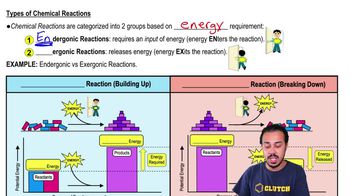 05:48
05:48How do organisms control the rate of metabolic activities in their cells?
For the phrase given below, indicate the type of metabolism referred to, using the following choices:
a. Anabolism only
b. Both anabolism and catabolism (amphibolic)
c. Catabolism only
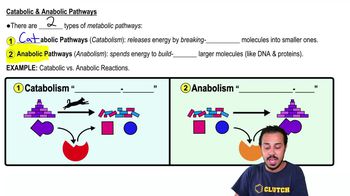
Is endergonic
_______ is a cyclic series of eight reactions involved in the catabolism of acetyl-CoA that yields eight molecules of NADH and two molecules of FADH2.
Examine the biosynthetic pathway for the production of the amino acids tryptophan, tyrosine, and phenylalanine in the figure. Where do the initial reactants (erythrose 4-phosphate and PEP) originate?
The initial catabolism of glucose occurs by glycolysis and/or the ________ and ________pathways.
How does a noncompetitive inhibitor at a single allosteric site affect a whole pathway of enzymatic reactions?