The microbial death rate is used to measure the effectiveness of: a. A detergent b. An antiseptic c. Sanitization techniques d. All of the above
Verified step by step guidance
1
Understand the concept of microbial death rate: it refers to the rate at which microorganisms are killed under specific conditions.
Recognize that microbial death rate is a key measure to evaluate how effective an agent or process is at killing microbes.
Consider the options: detergents, antiseptics, and sanitization techniques all aim to reduce or eliminate microbial populations.
Since microbial death rate measures the killing effectiveness, it applies to all these agents and methods that reduce microbial numbers.
Therefore, microbial death rate is used to measure the effectiveness of detergents, antiseptics, and sanitization techniques collectively.
Verified video answer for a similar problem:
This video solution was recommended by our tutors as helpful for the problem above
Video duration:
1m
Play a video:
0 Comments
Key Concepts
Here are the essential concepts you must grasp in order to answer the question correctly.
Microbial Death Rate
Microbial death rate refers to the rate at which microorganisms are killed over time under specific conditions. It is a key measure to evaluate how quickly and effectively an agent or process reduces microbial populations.
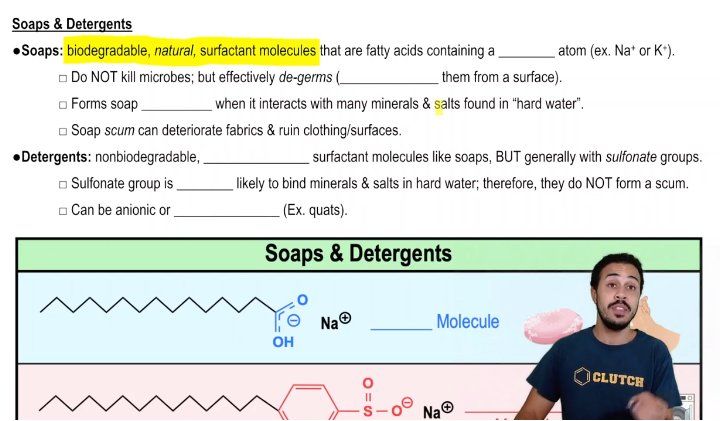
Antiseptics are chemical agents applied to living tissues to inhibit or kill microbes, while detergents are cleaning agents that remove dirt and microbes from surfaces. Both are tested for their ability to reduce microbial load, often using microbial death rate as a metric.
Sanitization involves processes that reduce microbial numbers on surfaces to safe levels, often in food or healthcare settings. Measuring microbial death rate helps assess the effectiveness of these techniques in lowering microbial contamination.

 1:41 minutes
 Verified step by step guidance

 08:59
08:59