Ch. 12 - Characterizing and Classifying Eukaryotes
Bauman - Microbiology with Diseases by Taxonomy 6th Edition
Bauman6th EditionMicrobiology with Diseases by TaxonomyISBN: 9780134832302Not the one you use?Change textbook
Chapter 12, Problem 14

Which of the following is common to mitosis and meiosis?
a. Spindle
b. Crossing over
c. Tetrad of chromatids
d. Cytokinesis

Verified step by step guidance
1
Step 1: Understand the processes of mitosis and meiosis. Both are types of cell division but serve different purposes: mitosis results in two identical daughter cells, while meiosis produces four genetically diverse gametes.
Step 2: Review the options given: (a) spindle, (b) crossing over, (c) tetrad of chromatids, and (d) cytokinesis. Identify which features occur in both mitosis and meiosis.
Step 3: Recall that the spindle apparatus is a structure made of microtubules that helps separate chromosomes during cell division. It forms in both mitosis and meiosis.
Step 4: Recognize that crossing over (exchange of genetic material between homologous chromosomes) and tetrads (paired homologous chromosomes) are specific to meiosis, not mitosis.
Step 5: Cytokinesis, the division of the cytoplasm, occurs in both mitosis and meiosis, but since the question asks for what is common, consider which option best fits both processes.

Verified video answer for a similar problem:

This video solution was recommended by our tutors as helpful for the problem above.
Video duration:
3m
Was this helpful?

Key Concepts

Here are the essential concepts you must grasp in order to answer the question correctly.

Spindle Apparatus

The spindle apparatus is a structure composed of microtubules that forms during cell division. It is responsible for separating chromosomes into daughter cells in both mitosis and meiosis, ensuring accurate distribution of genetic material.
Recommended video:
Guided course
06:56
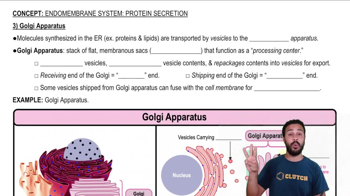
Golgi Apparatus

Crossing Over

Crossing over is the exchange of genetic material between homologous chromosomes during prophase I of meiosis. This process increases genetic diversity and does not occur in mitosis.
Recommended video:
Guided course
05:31
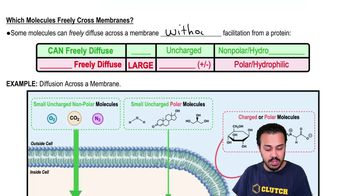
Which Molecules Freely Cross Membranes?

Cytokinesis

Cytokinesis is the division of the cytoplasm following nuclear division, resulting in two separate daughter cells. It occurs at the end of both mitosis and meiosis, completing the cell division process.
Recommended video:
Guided course
04:17
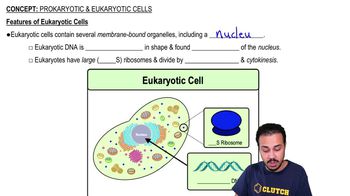
Features of Eukaryotic Cells