Cationic chromophores such as methylene blue ionically bond to _______(positively/negatively) charged chemicals such as DNA and proteins.
Verified step by step guidance
1
Understand the nature of cationic chromophores: 'Cationic' means the molecule carries a positive charge.
Recall that opposite charges attract, so positively charged molecules will bind to negatively charged molecules.
Identify the charge of DNA and proteins: DNA has a negatively charged phosphate backbone, and many proteins have negatively charged side chains.
Conclude that cationic chromophores like methylene blue bind ionically to negatively charged chemicals such as DNA and proteins.
Therefore, the blank should be filled with 'negatively' to indicate the charge of the chemicals methylene blue binds to.
Verified video answer for a similar problem:
This video solution was recommended by our tutors as helpful for the problem above
Video duration:
2m
Play a video:
0 Comments
Key Concepts
Here are the essential concepts you must grasp in order to answer the question correctly.
Cationic Chromophores
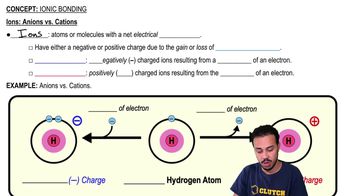
Cationic chromophores are positively charged dye molecules that bind to negatively charged substances. Their positive charge allows them to interact electrostatically with molecules like DNA and proteins, which carry negative charges.
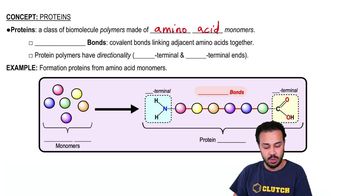
DNA and many proteins have negatively charged groups, such as phosphate groups in DNA and acidic amino acid residues in proteins. These negative charges enable ionic interactions with positively charged molecules like cationic dyes.
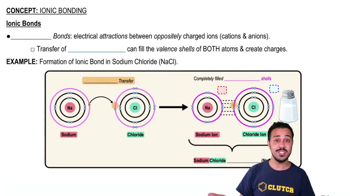
Ionic bonding involves electrostatic attraction between oppositely charged ions. In microbiology staining, cationic dyes bind to negatively charged cellular components through ionic bonds, allowing visualization of structures under a microscope.