Beer is made with water, malt, and yeast; hops are added for flavor. What is the purpose of the water, malt, and yeast? What is malt?
Ch. 28 - Applied and Industrial Microbiology

Tortora14th EditionMicrobiology: An IntroductionISBN: 9780138200398Not the one you use?Change textbook
Chapter 28, Problem 7
The manufacture of paper includes the use of bleach and formaldehyde-based glue. The microbial enzyme xylanase whitens paper by digesting dark lignins. Oxidase causes the fibers to stick together, and cellulase will remove ink. List three advantages of using these microbial enzymes over traditional chemical methods for making paper.
Verified step by step guidance1
Identify the traditional chemical methods used in paper manufacturing, such as bleach and formaldehyde-based glue, and understand their environmental and health impacts.
Explain how microbial enzymes like xylanase, oxidase, and cellulase function specifically in the paper-making process, focusing on their targeted actions (e.g., xylanase digests lignins to whiten paper).
Discuss the environmental advantages of using microbial enzymes, such as reduced chemical pollution and lower toxicity compared to harsh chemicals like bleach and formaldehyde.
Highlight the efficiency and specificity of microbial enzymes, which can improve paper quality by selectively breaking down unwanted components without damaging the fibers.
Mention the potential economic benefits, including lower energy consumption and reduced need for expensive chemical inputs, making the process more sustainable and cost-effective.

Verified video answer for a similar problem:
This video solution was recommended by our tutors as helpful for the problem above.
Video duration:
1mWas this helpful?
Key Concepts
Here are the essential concepts you must grasp in order to answer the question correctly.
Microbial Enzymes in Paper Manufacturing
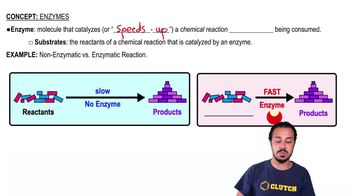
Microbial enzymes like xylanase, oxidase, and cellulase are biological catalysts produced by microorganisms that target specific components in paper production. They offer precise action, such as breaking down lignin or removing ink, improving paper quality while reducing harsh chemical use.
Recommended video:
Guided course
Enzymes
Environmental Impact of Enzymatic vs. Chemical Methods
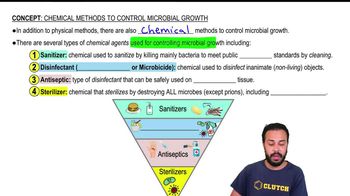
Using microbial enzymes reduces the reliance on harsh chemicals like bleach and formaldehyde, which can be toxic and polluting. Enzymatic processes are generally more eco-friendly, biodegradable, and generate less harmful waste, contributing to sustainable paper manufacturing.
Recommended video:
Guided course
Chemical Methods to Control Microbial Growth
Efficiency and Quality Benefits of Enzymatic Treatment
Enzymes work under milder conditions and with greater specificity, leading to improved fiber quality, better paper brightness, and reduced damage to fibers. This enhances the overall efficiency of the paper-making process and results in higher-quality end products.
Recommended video:
Guided course
Symbiotic Relationships
Related Practice
Textbook Question
984
views
Textbook Question
The term 12D treatment refers to
a. Heat treatment sufficient to kill 12 bacteria.
b. The use of 12 different treatments to preserve food.
c. A 1012 reduction in C. botulinum endospores.
d. Any process that destroys thermophilic bacteria.
1207
views
Textbook Question
Describe an example of bioconversion. What metabolic processes can result in fuels?
1158
views
Textbook Question
Which one of the following is not a fuel produced by microorganisms?
a. Algal oil
b. Ethanol
c. Hydrogen
d. Methane
e. Uranium
978
views
Textbook Question
Why is a bioreactor better than a large flask for industrial production of an antibiotic?
865
views
Textbook Question
Which type of radiation is used to preserve foods?
a. Ionizing
b. Nonionizing
c. Radiowaves
d. Microwaves
e. All of the above
870
views