Which one of the following diseases is not correctly matched to its reservoir? a. Influenza-animal b. Rabies-animal c. Botulism-nonliving d. Anthrax-nonliving e. Toxoplasmosis-cats
Verified step by step guidance
1
Step 1: Understand the concept of a reservoir in infectious diseases. A reservoir is the natural habitat where a pathogen normally lives, grows, and multiplies. It can be living (animals, humans) or nonliving (soil, water).
Step 2: Review each disease and identify its commonly known reservoir: Influenza typically has humans as the main reservoir, although some strains can be found in animals; Rabies is primarily maintained in animal reservoirs; Botulism is caused by Clostridium botulinum, which is found in nonliving reservoirs like soil; Anthrax is caused by Bacillus anthracis, which also persists in nonliving reservoirs such as soil; Toxoplasmosis is caused by Toxoplasma gondii, with cats as the definitive host and reservoir.
Step 3: Compare the given matches to the known reservoirs: (a) influenza-animal, (b) rabies-animal, (c) botulism-nonliving, (d) anthrax-nonliving, (e) toxoplasmosis-cats.
Step 4: Identify which pairing is incorrect by checking if the reservoir listed matches the typical reservoir for that disease. For example, influenza is primarily a human reservoir disease, so 'influenza-animal' may be incorrect.
Step 5: Conclude which option is not correctly matched based on the above analysis.
Verified video answer for a similar problem:
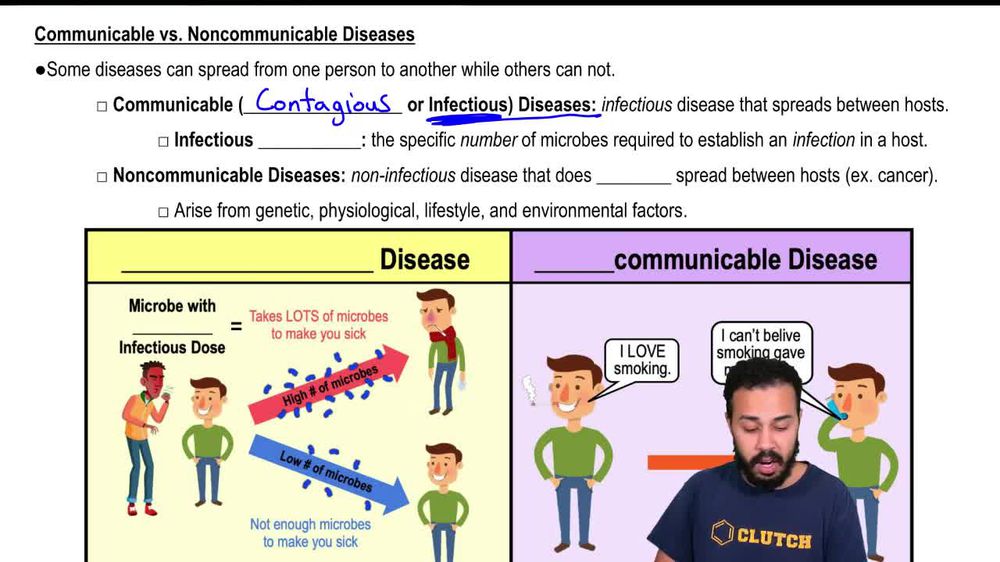
This video solution was recommended by our tutors as helpful for the problem above
Video duration:
3m
Play a video:
0 Comments
Key Concepts
Here are the essential concepts you must grasp in order to answer the question correctly.
Disease Reservoirs
A disease reservoir is the natural habitat where a pathogen lives, grows, and multiplies. Reservoirs can be living organisms like animals or humans, or nonliving environments such as soil or water. Understanding reservoirs helps identify sources of infection and control disease spread.
Zoonotic diseases are infections transmitted from animals to humans. Many pathogens have animal reservoirs, such as rabies in mammals or toxoplasmosis in cats. Recognizing zoonotic reservoirs is crucial for preventing cross-species transmission.
Some pathogens persist in nonliving reservoirs like soil, water, or decaying matter. For example, anthrax spores survive in soil, and botulism toxin is produced in improperly stored food. Identifying nonliving reservoirs aids in environmental control measures.