Describe the three developmental stages of the bacteria Ehrlichia and Anaplasma.
Verified step by step guidance
1
Begin by understanding that both Ehrlichia and Anaplasma are obligate intracellular bacteria that undergo a unique developmental cycle involving three main stages within host cells.
Identify the first stage as the 'Elementary Body (EB),' which is the infectious, metabolically inactive form that can survive outside host cells and initiate infection by entering new host cells.
Recognize the second stage as the 'Reticulate Body (RB),' which is the non-infectious, metabolically active form that replicates by binary fission inside membrane-bound vacuoles within the host cell.
Note the third stage as the 'Intermediate Body (IB),' which represents the transitional form between the reticulate body and the elementary body, preparing to convert back into the infectious form.
Summarize that the developmental cycle involves the EB entering the host cell, transforming into RB for replication, then converting into IB, and finally maturing back into EB to be released and infect new cells.
Verified video answer for a similar problem:
This video solution was recommended by our tutors as helpful for the problem above
Video duration:
2m
Play a video:
0 Comments
Key Concepts
Here are the essential concepts you must grasp in order to answer the question correctly.
Developmental Stages of Ehrlichia and Anaplasma
Ehrlichia and Anaplasma undergo a unique biphasic developmental cycle consisting of two main forms: the dense-cored (infectious) form and the reticulate (replicative) form. The dense-cored form initiates infection by entering host cells, while the reticulate form replicates within membrane-bound vacuoles before differentiating back into dense-cored forms to infect new cells.
Intracellular Life Cycle and Host Cell Interaction
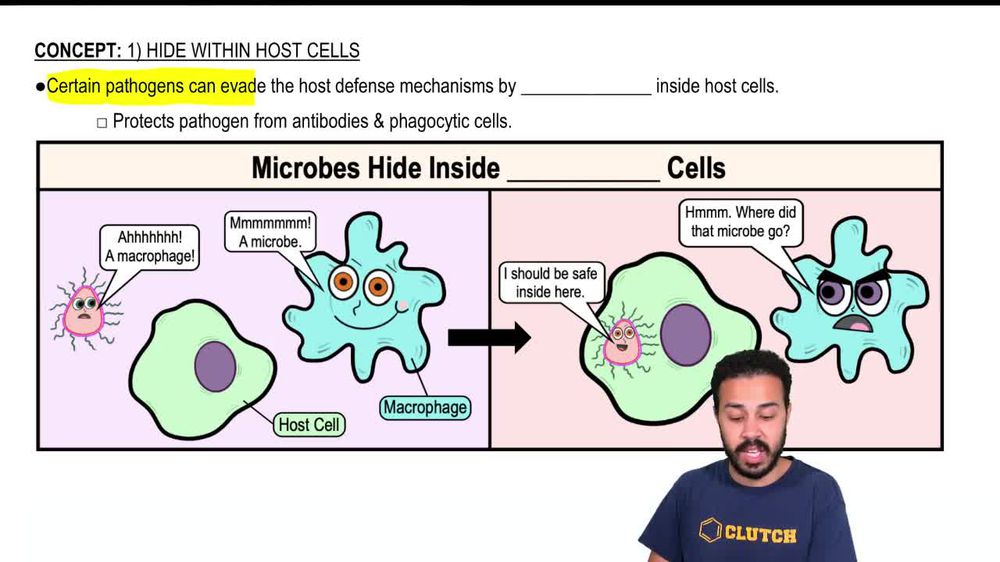
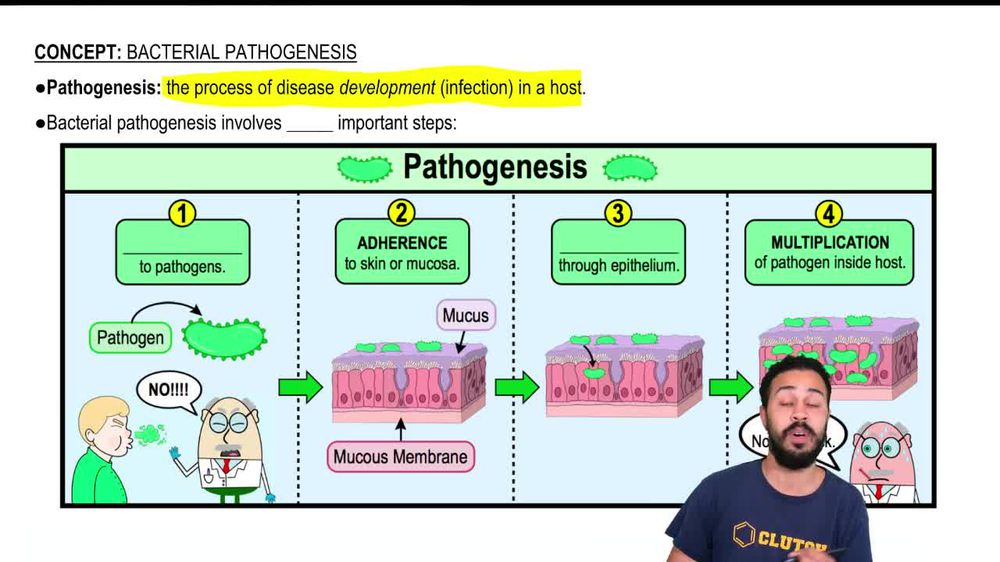
Both bacteria are obligate intracellular pathogens that replicate inside host leukocytes within specialized vacuoles called morulae. Their developmental stages are adapted to evade host immune responses and facilitate survival and replication within the intracellular environment, which is critical for their pathogenicity.
Significance of Morphological Changes in Pathogenesis
The morphological transition between dense-cored and reticulate forms is essential for the bacteria's life cycle and disease progression. The infectious dense-cored form is metabolically inactive but capable of host cell entry, while the reticulate form is metabolically active and divides, highlighting the importance of these stages in transmission and infection.

 2:24 minutes
 Verified step by step guidance
 03:16
03:16