a. a molecule of RNA found in bacterial cells b. distinguished from a chromosome by being circular c. a structure in bacterial cells formed from plasma membrane d. extrachromosomal DNA
Verified step by step guidance
1
Understand the definition of a plasmid: A plasmid is a small, circular DNA molecule that exists independently of the chromosomal DNA in bacterial cells.
Recall that plasmids are not RNA molecules, so option (a) can be ruled out because plasmids are DNA, not RNA.
Consider the shape of plasmids: while many plasmids are circular, bacterial chromosomes can also be circular, so being circular alone does not distinguish plasmids from chromosomes, making option (b) incomplete or misleading.
Recognize that plasmids are not structures formed from the plasma membrane, so option (c) is incorrect.
Identify that plasmids are extrachromosomal DNA, meaning they exist outside the main bacterial chromosome, which matches option (d).
Verified video answer for a similar problem:
This video solution was recommended by our tutors as helpful for the problem above
Video duration:
2m
Play a video:
0 Comments
Key Concepts
Here are the essential concepts you must grasp in order to answer the question correctly.
Plasmid Definition
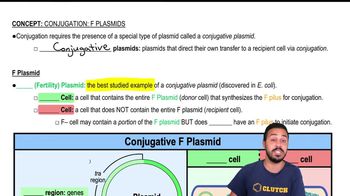
A plasmid is a small, circular DNA molecule found in bacterial cells that exists independently of the chromosomal DNA. It carries genes that can provide advantageous traits, such as antibiotic resistance, and can replicate autonomously.
Chromosomal DNA contains the essential genetic information for the cell's survival, while extrachromosomal DNA, like plasmids, exists outside the chromosome and often carries non-essential but beneficial genes. Plasmids are a common form of extrachromosomal DNA in bacteria.
Plasmids are typically circular double-stranded DNA molecules, distinct from linear chromosomal DNA. They are not formed from the plasma membrane or RNA, but are separate genetic elements that can be transferred between bacteria.