Ch. 11 - The Prokaryotes: Domains Bacteria and Archaea
Tortora - Microbiology: An Introduction 14th Edition
Tortora14th EditionMicrobiology: An IntroductionISBN: 9780138200398Not the one you use?Change textbook
Chapter 11, Problem 9

When Legionella was newly discovered, why was it classified with the pseudomonads?
a. It is a pathogen.
b. It is an aerobic gram-negative rod.
c. It is difficult to culture.
d. It is found in water.
e. None of the above

Verified step by step guidance
1
Step 1: Understand the context of the question, which asks why the newly discovered genus Legionella was initially classified with the pseudomonads. This involves comparing characteristics of Legionella with those of pseudomonads.
Step 2: Recall that pseudomonads are a group of aerobic, gram-negative rods commonly found in water and soil environments, known for their metabolic diversity and ability to survive in various habitats.
Step 3: Analyze each option in relation to Legionella's known features at the time of discovery: (a) being a pathogen is not unique to pseudomonads, (b) being an aerobic gram-negative rod matches a key morphological and physiological trait of pseudomonads, (c) difficulty in culturing is a laboratory challenge but not a taxonomic criterion, (d) presence in water is common but not exclusive to pseudomonads.
Step 4: Identify that the primary reason for the initial classification was based on Legionella's morphology and physiology, specifically being an aerobic gram-negative rod, which aligned it with pseudomonads before more detailed genetic and biochemical analyses were available.
Step 5: Conclude that the classification was provisional and based on observable traits, emphasizing the importance of morphology and metabolism in early bacterial taxonomy.

Verified video answer for a similar problem:

This video solution was recommended by our tutors as helpful for the problem above.
Was this helpful?

Key Concepts

Here are the essential concepts you must grasp in order to answer the question correctly.

Gram-negative Bacteria Classification

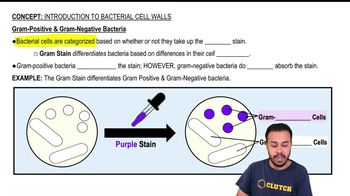
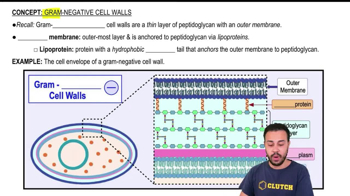
Gram-negative bacteria have a thin peptidoglycan layer and an outer membrane, staining pink in Gram staining. Classification often groups bacteria by shape, staining, and metabolism, which initially placed Legionella with pseudomonads due to shared traits like being aerobic gram-negative rods.
Recommended video:
Guided course
02:20
Gram-Positive & Gram-Negative Bacteria

Aerobic Gram-negative Rods

Aerobic gram-negative rods are bacteria that require oxygen for growth and have a rod-like shape. Both Legionella and pseudomonads share these characteristics, which led to their early taxonomic association before more detailed genetic and biochemical analyses differentiated them.
Recommended video:
Guided course
3:04
Gram-Negative Cell Walls

Bacterial Culturing Challenges

Some bacteria, like Legionella, are difficult to culture because they require specific nutrients or conditions not met by standard media. This trait can influence initial classification and study, but it was not the primary reason Legionella was grouped with pseudomonads.
Recommended video:
Guided course
02:58
Growing a Pure Culture