

Several laboratory tests are used to identify viruses. From your study of this chapter alone, which tests would you surmise are the most common?
Verified step by step guidance
1
Step 1: Understand that virus identification in the laboratory often relies on detecting viral components such as nucleic acids, proteins, or the effects viruses have on host cells.
Step 2: Recognize that common laboratory tests include methods like polymerase chain reaction (PCR) to detect viral DNA or RNA, serological tests to identify antibodies or antigens, and culture techniques to observe cytopathic effects in host cells.
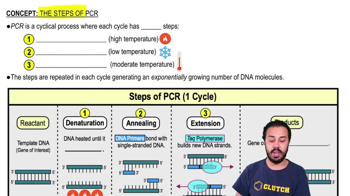
Step 3: Consider that PCR is widely used because it is highly sensitive and specific for detecting viral genetic material, making it a common choice for virus identification.
Step 4: Note that serological tests, such as enzyme-linked immunosorbent assay (ELISA), are also common because they can detect immune responses to viruses, which helps in diagnosing infections.
Step 5: Summarize that the most common tests from the chapter likely include PCR for nucleic acid detection, serological assays for antibody or antigen detection, and viral culture methods to observe virus-induced changes in cells.
Verified video answer for a similar problem:
This video solution was recommended by our tutors as helpful for the problem above
Video duration:
1m
Play a video:
0 Comments
Key Concepts
Here are the essential concepts you must grasp in order to answer the question correctly.
Virus Identification Methods
Virus identification involves various laboratory techniques that detect viral presence or activity. Common methods include culture techniques, serological assays, and molecular tests, each targeting different viral components or effects.
Serological tests detect antibodies or antigens related to viruses in patient samples. These tests, such as ELISA and agglutination assays, are widely used due to their speed and ability to indicate current or past infections.
Polymerase Chain Reaction (PCR) amplifies viral genetic material, allowing sensitive and specific detection of viruses. PCR is a common and powerful tool in viral diagnostics because it can identify viruses even at low concentrations.